
Yoga for beginners at home works best when you keep it simple: a small space, a short routine, and a few safety cues you can repeat every time. If you’re staring at a video library thinking “I don’t know where to start,” you’re not alone, most beginners quit because the first week feels confusing, not because they lack discipline.
The good news is you don’t need fancy equipment or perfect flexibility, you need a plan that matches real life. A home practice can feel less intimidating than a studio, but it also removes the structure, so it helps to decide what you’ll do before you step on the mat.
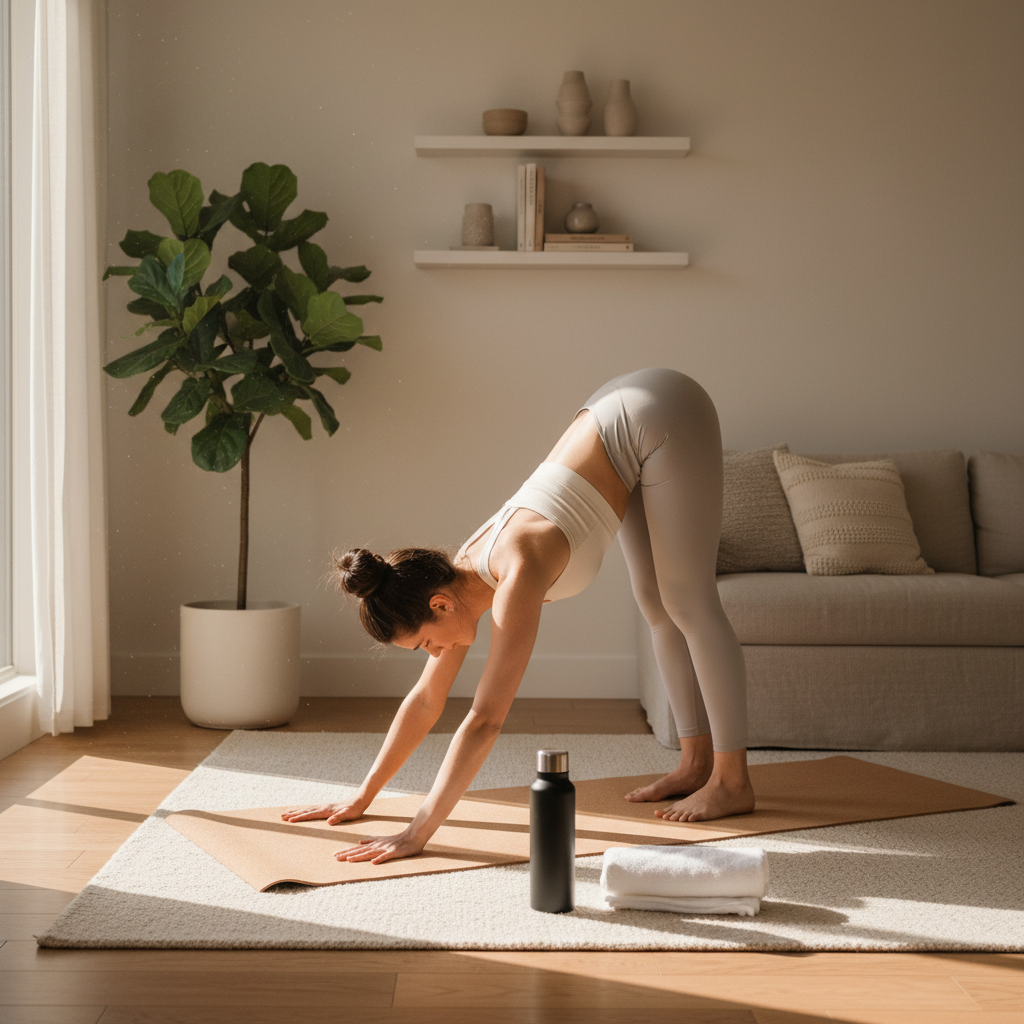
This guide focuses on what actually helps: picking a beginner-friendly routine, learning a few alignment basics, and building a realistic weekly schedule. You’ll also get a quick self-check list, a table of poses with common mistakes, and an easy way to scale intensity up or down.
Why starting at home feels hard (and how to make it easier)
Most people assume the barrier is flexibility or strength, but at home the bigger issues tend to be decision fatigue, uncertainty, and inconsistent feedback. If you relate to any of these, you’re in the normal zone.
- Too many options: hundreds of styles, teachers, and “30-day” challenges, so you keep browsing instead of practicing.
- Not sure what “right” feels like: without an instructor, beginners often hold their breath, shrug shoulders, or dump weight into wrists.
- Going too hard too soon: long flows can be motivating, but soreness or wrist pain ends momentum fast.
- Home distractions: notifications, pets, kids, laundry, and suddenly the “quick session” never starts.
According to Yoga Alliance... many yoga programs emphasize safety, accessible modifications, and gradual progression, which is exactly what home beginners should copy: fewer poses, clearer cues, slower pace.
A quick self-check: what kind of beginner are you?
Before you pick a routine, it helps to name your starting point, not as a label, just as a decision tool. Check the statements that feel most true right now.
- I’m stiff after sitting a lot, hips and hamstrings feel tight, but I don’t have sharp pain.
- I’m deconditioned, basic planks and lunges feel hard, I get winded quickly.
- I’m anxious or stressed, I mainly want a calmer body and better sleep.
- I have a cranky area (wrists, knees, low back, shoulders), I need to be careful with loading.
If you checked the last one, you can still do yoga for beginners at home, but it’s smart to be conservative and consider asking a qualified professional for individualized guidance, especially if you’ve had an injury, numbness, radiating pain, or symptoms that keep returning.
Set up your space and gear (keep it minimal)
You can practice in a bedroom corner, but a small setup makes consistency easier. Think “ready in 30 seconds,” not “Pinterest yoga room.”
- Space: enough room to extend arms out to each side and step one leg back.
- Mat: any non-slip mat works, if it slides, place it on carpet or a non-slip pad.
- Two props that matter most: a folded towel or blanket, and a firm pillow or yoga block substitute (a thick book can work for some poses).
- Optional: a strap (or belt) for hamstrings, and a cushion for knees.
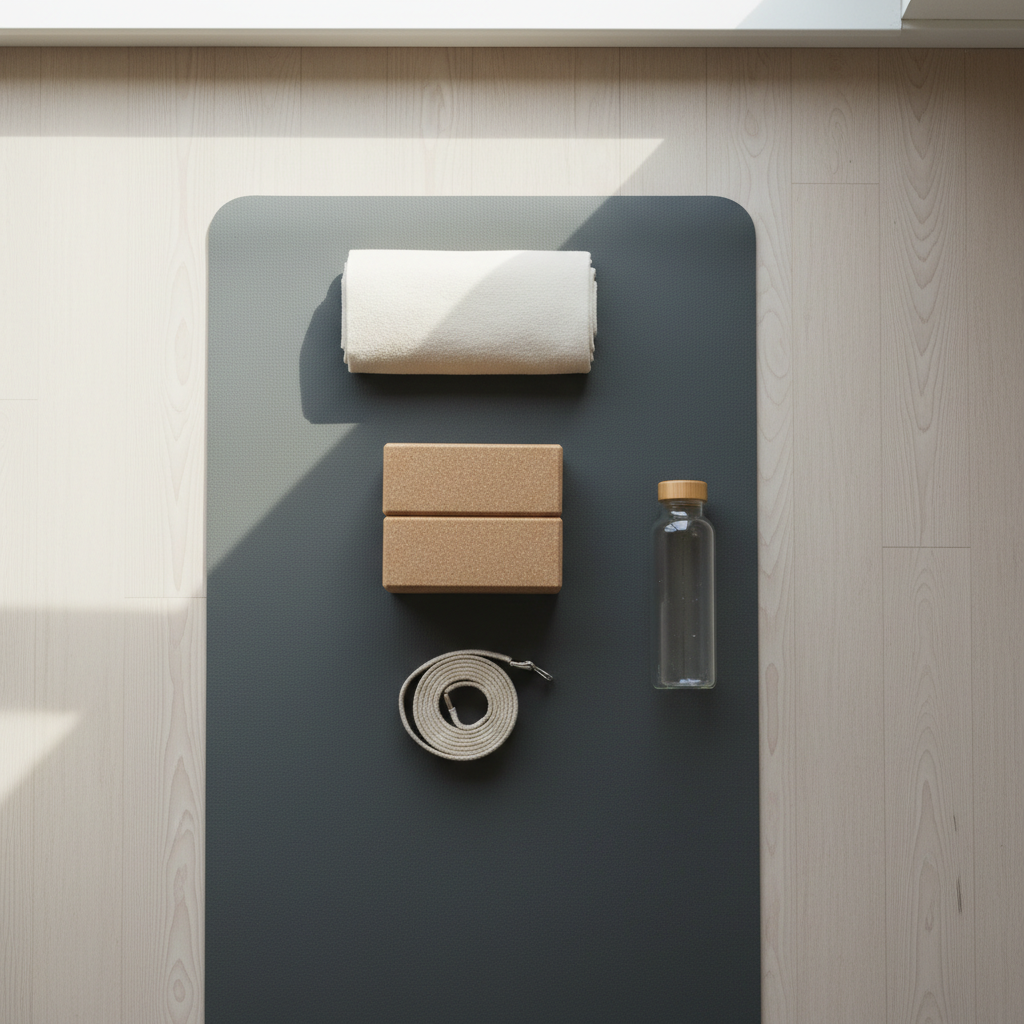
One small habit that helps: leave your mat visible for a week. When it’s out, the practice becomes the default, not a “project.”
The safest foundation: breathing, alignment, and pain rules
You don’t need to memorize anatomy, but you do need a few guardrails. They prevent the classic beginner pattern: pushing harder because you think that’s progress.
Breath basics (simple, not mystical)
- Breathe through your nose if comfortable, slow enough that you can keep a steady rhythm.
- If you notice breath-holding, lighten the pose until you can breathe again.
- Use the exhale to soften, not to force deeper range.
Alignment cues that prevent common aches
- Wrists: spread fingers, press knuckles, don’t collapse into the heel of the hand.
- Shoulders: keep them away from ears, especially in Downward Dog and Plank.
- Knees: in lunges and Chair, let the knee track roughly over the middle toes, not caving inward.
- Low back: aim for “long spine” more than “deep stretch,” bend knees when needed.
Pain rules (worth taking seriously)
Yoga sensations can be intense, but sharp, pinching, electrical, or joint pain is a stop sign. If a pose keeps triggering symptoms even with modifications, skip it and swap in a gentler alternative. For medical concerns, it’s reasonable to consult a healthcare professional or a physical therapist.
Beginner pose guide: what to do, what to avoid, what to swap
Use this as your quick reference when you practice yoga for beginners at home. You’ll notice the swaps are often “less flashy,” but that’s how you keep momentum.
| Pose | Focus | Common mistake | Try this instead |
|---|---|---|---|
| Mountain (Tadasana) | Posture, breath | Rib flare, locked knees | Slight knee bend, soften ribs |
| Cat-Cow | Spine mobility | Moving only neck | Smaller range, move mid-back |
| Downward Dog | Shoulders, hamstrings | Rounded back, wrist dump | Bend knees, use tabletop |
| Low Lunge | Hip flexors | Forcing depth, knee discomfort | Padding under knee, shorter stance |
| Bridge | Glutes, core support | Overarching low back | Lift less, exhale to brace |
| Child’s Pose | Rest, back body | Knees compressed | Wide knees, pillow under chest |
A simple 20-minute at-home routine (do this 3x/week)
If you want one routine to repeat until it feels familiar, use this. Keep transitions slow, and treat it like practice, not a performance.
Warm-up (5 minutes)
- Mountain Pose, 5 slow breaths
- Forward Fold (bend knees), 5 breaths
- Tabletop to Cat-Cow, 6–8 rounds
Main sequence (12 minutes)
- Downward Dog, 3–5 breaths, then step to a Low Lunge (right), 4 breaths
- Half Split (right, gentle hamstring stretch), 4 breaths
- Step back to Tabletop, repeat lunge/half split (left)
- Modified Plank (knees down) or Wall Plank, 2 sets of 20–30 seconds
- Bridge Pose, 6–8 slow reps with breath
Cool-down (3 minutes)
- Supine Twist, each side 4–5 breaths
- Child’s Pose or Legs Up the Wall, 6–8 breaths
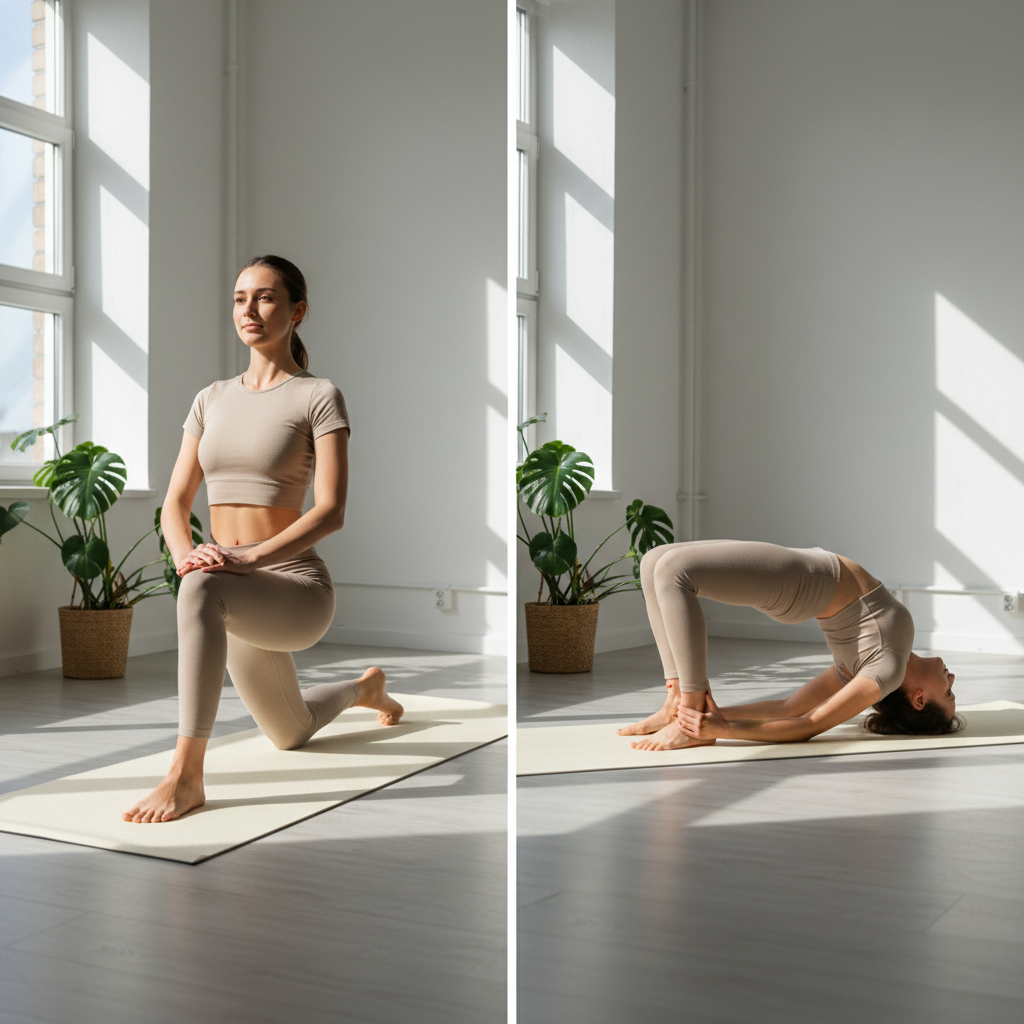
Key point: if this routine feels easy, don’t rush to add complexity, add consistency. A clean 20 minutes beats an ambitious 60 minutes you only do once.
How to build a realistic weekly plan (without burning out)
A common sweet spot is 3 “practice” days plus 1 shorter recovery session. The goal is to keep your body comfortable enough that you want to come back.
- Mon: 20-minute routine (full)
- Wed: 20-minute routine (full)
- Fri: 20-minute routine (full)
- Sun: 10 minutes gentle mobility + breathing
If you’re tight or stressed, consider adding a 5-minute bedtime session instead of another full workout. Many people find that small add-on is what makes yoga for beginners at home feel “sticky” as a habit.
Common mistakes that slow progress (and what to do instead)
- Chasing deep stretches: aim for steady breathing and stability, depth arrives later for many bodies.
- Copying advanced shapes: the version you can do with good breath is the right version today.
- Ignoring wrists and shoulders: use fists, forearms, or a wall when needed, and shorten Downward Dog holds.
- Doing random videos: variety is fun, but repetition is how beginners learn alignment and pacing.
- All-or-nothing thinking: if you miss a day, restart with 10 minutes, momentum matters more than streaks.
According to CDC... regular physical activity supports overall health, and consistency tends to matter more than occasional intense efforts. Yoga can be part of that routine, but it should feel sustainable.
When it makes sense to get professional help
Online videos can take you far, but some situations deserve a second set of trained eyes. Consider reaching out to a certified yoga instructor, physical therapist, or healthcare professional if you notice any of the following.
- Pain that feels sharp, worsening, or keeps returning in the same joint
- Numbness, tingling, or radiating symptoms
- Recent surgery, pregnancy, or a condition where movement guidance needs to be individualized
- You feel stuck because you can’t tell if your form is safe
Even one session can help you dial in modifications, which makes solo practice at home safer and more enjoyable.
Conclusion: keep it small, repeatable, and kind to your body
Yoga at home doesn’t need to be complicated to be effective, it needs to be repeatable. Pick one short routine, practice it a few times each week, and treat discomfort as information rather than a challenge to push through.
If you want an easy next step, schedule three 20-minute sessions on your calendar, then commit to doing the first five minutes no matter what, once you start moving, the rest usually follows.
FAQ
How long should a beginner do yoga at home?
Many beginners do well with 15–25 minutes, 3 times per week. Longer sessions can work, but only if you can keep good breath and avoid rushing alignment.
Is yoga for beginners at home enough to get stronger?
Often yes, especially if you repeat a simple routine and gradually increase holds in Plank, Bridge, and standing poses. If strength is a major goal, you might add light resistance training on other days.
What if I’m not flexible at all?
That’s a normal starting point. Use bent knees, props, and shorter ranges, flexibility tends to improve when you practice consistently without forcing end-range positions.
Which yoga style is easiest for a total beginner?
Gentle Hatha and beginner-focused Vinyasa are common starting points, but the teacher’s cueing matters more than the label. Look for “beginner,” “gentle,” or “foundations” classes.
Can I do yoga every day as a beginner?
Possibly, if intensity stays low and you vary what you do, for example, three practice days plus short mobility or breathing sessions. If you feel joint irritation or persistent soreness, back off and reassess.
What should I do if my wrists hurt in Downward Dog?
Try bending knees, shortening the hold, and pressing through knuckles. You can also swap in Tabletop, Forearm Down Dog, or Wall Down Dog while wrists adapt.
Do I need a yoga mat and blocks to start?
A mat helps with grip, but you can begin with a towel on carpet. Blocks are useful, yet thick books or a firm pillow can work in many cases, as long as the setup feels stable.
Key takeaways
- Start small: one 20-minute routine repeated beats random long sessions.
- Use guardrails: steady breathing, joint-friendly alignment, and pain rules.
- Modify early: bending knees and using props is skillful, not “cheating.”
- Build a schedule: 3 days per week is a practical baseline for most beginners.
If you’re trying to make yoga for beginners at home feel less chaotic, a simple plan and a short routine you can repeat usually bring the fastest relief, and if you want help picking modifications for your body, working with a qualified instructor even briefly can save a lot of trial and error.