
how to choose a cycling jersey size usually comes down to two things people skip: accurate measurements and understanding what “fit” the brand is designing for.
If your jersey rides up, flaps in the wind, or pinches your shoulders, it’s not just annoying, it can ruin long rides, make pockets hard to use, and even cause chafing. The tricky part is that cycling apparel sizing isn’t as universal as T-shirts, and a “Medium” can feel totally different across brands.
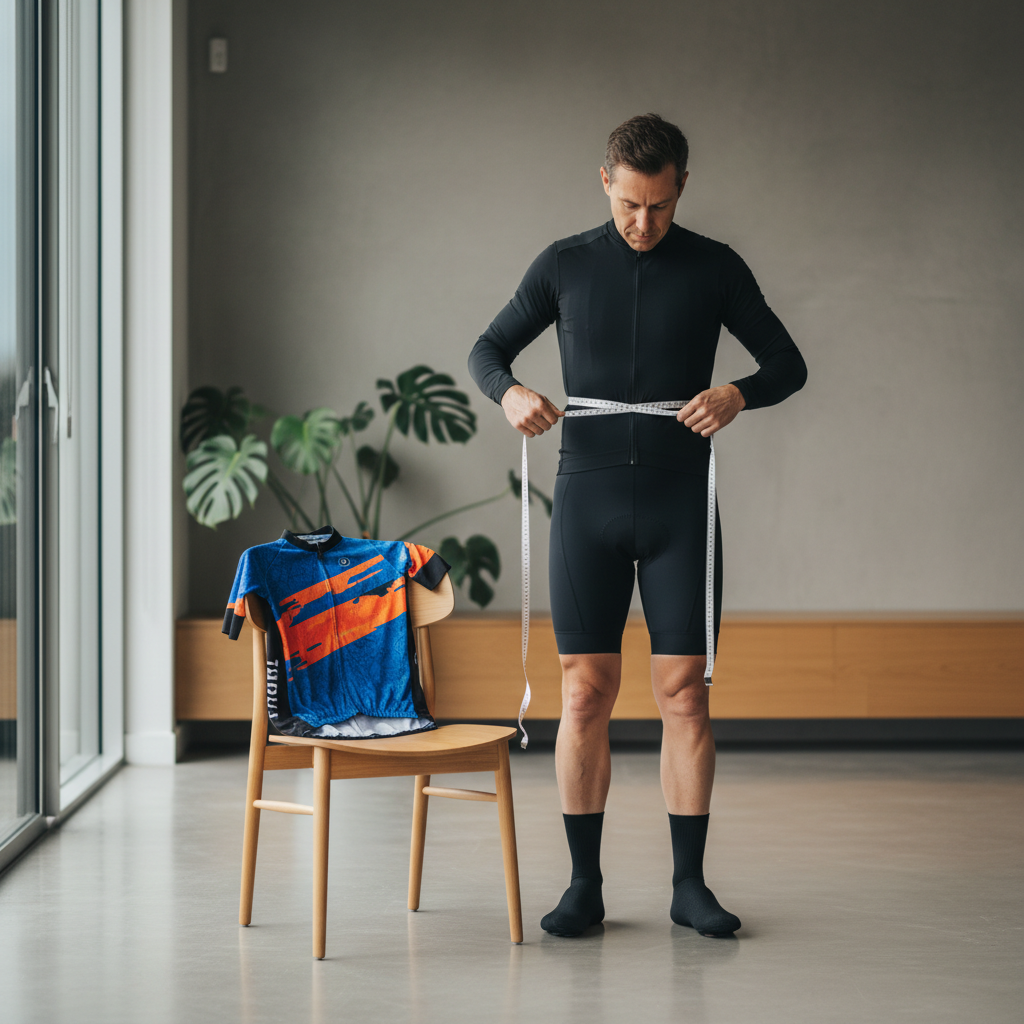
This guide focuses on practical sizing decisions: what to measure, how to read size charts, how snug is “snug,” and how to decide when to size up or down based on your riding style. You’ll also get a quick checklist, a comparison table, and a few fit “tells” that experienced riders use.
Start with the fit you actually want (not the size label)
Before you grab a tape measure, decide what kind of jersey fit matches your riding. A lot of sizing frustration comes from buying a race-cut jersey when you expected a relaxed feel, or vice versa.
- Race / Aero fit: Very close to the body, minimal fabric movement, shorter front, longer back. Great for speed, can feel unforgiving off the bike.
- Club / Performance fit: Snug but not skin-tight, easier breathing room, still reduces flapping. Common “do-it-all” choice.
- Relaxed / Endurance fit: More room in the torso, often longer overall, usually more forgiving around the midsection.
One honest rule: if you hate the feeling of compression on your stomach or arms, don’t force yourself into race fit just because it looks “pro.” Comfort keeps you riding.
Measure the right way: chest, waist, hips, and torso cues
Most size charts rely on chest first, then waist and hips. If you only measure one area, make it your chest, but jerseys often fail at the shoulders or zipper line when the waist measurement is ignored.
Quick measuring tips that prevent bad data
- Use a soft tailor’s tape, stand relaxed, don’t suck in your stomach.
- Measure over a thin base layer or bare skin, not a hoodie.
- Keep the tape level all the way around, especially across your back.
- Write numbers down right away, memory lies.
What to measure (and where it goes wrong)
- Chest: Around the fullest part, usually across nipple line. Too high gives a smaller number.
- Waist: Natural waist (often above where jeans sit). Many people measure “belt line” instead.
- Hips (if chart asks): Widest point of seat/hips. Helpful for longer jerseys or tight lower hems.
- Shoulder/arm feel (cue, not a number): If you often feel tightness reaching forward, prioritize shoulder mobility even if chest fits.
According to USA Cycling, proper on-bike fit helps support comfort and efficiency, and clothing that restricts movement can work against that goal. Clothing size isn’t bike fit, but the logic is similar: your riding posture matters.
Use the brand size chart like a decision tool (not a suggestion)
Brand charts are usually your best starting point, but they’re only useful if you interpret them the way the brand intends. Some brands list body measurements, others list garment measurements, and mixing those up creates instant confusion.

Here’s how experienced shoppers read charts:
- If the chart says body measurements, pick the size where your chest/waist fall, then adjust for preferred fit.
- If the chart says garment measurements, remember the fabric stretch and “ease” are baked in, you may need to compare to a jersey you already own.
- If you sit between two sizes, decide based on fit goal and your “tight spot” area (often chest/arms for men, hips/hem for women, but not always).
Size up or size down: a practical decision table
People ask for a universal rule, but it varies by brand cut, fabric compression, and what you wear underneath. Still, these patterns hold in a lot of real purchases.
| Situation | What usually works | Why |
|---|---|---|
| You’re between sizes and want aero/race fit | Size down (only if shoulders feel free) | Race cuts assume stretch and on-bike posture |
| You’re between sizes and want all-day comfort | Size up | Reduces zipper strain, improves breathing room |
| Chest fits, waist feels tight when riding | Size up or choose a relaxed cut | Forward posture increases abdominal pressure |
| Arms/shoulders feel restrictive off-bike | Don’t size down; try different cut/brand | Mobility matters for steering and climbing |
| Jersey flaps at speed, pockets sag | Size down or pick a performance cut | Excess fabric catches wind and drags pockets |
| Wearing winter base layers often | Size up (or buy a cold-weather jersey) | Layering changes fit more than people expect |
Key point: if sizing down makes the zipper ripple or feel “loaded,” it’s a warning sign. Zippers fail early when they live under constant tension.
Fit checks you can do in 60 seconds (at home)
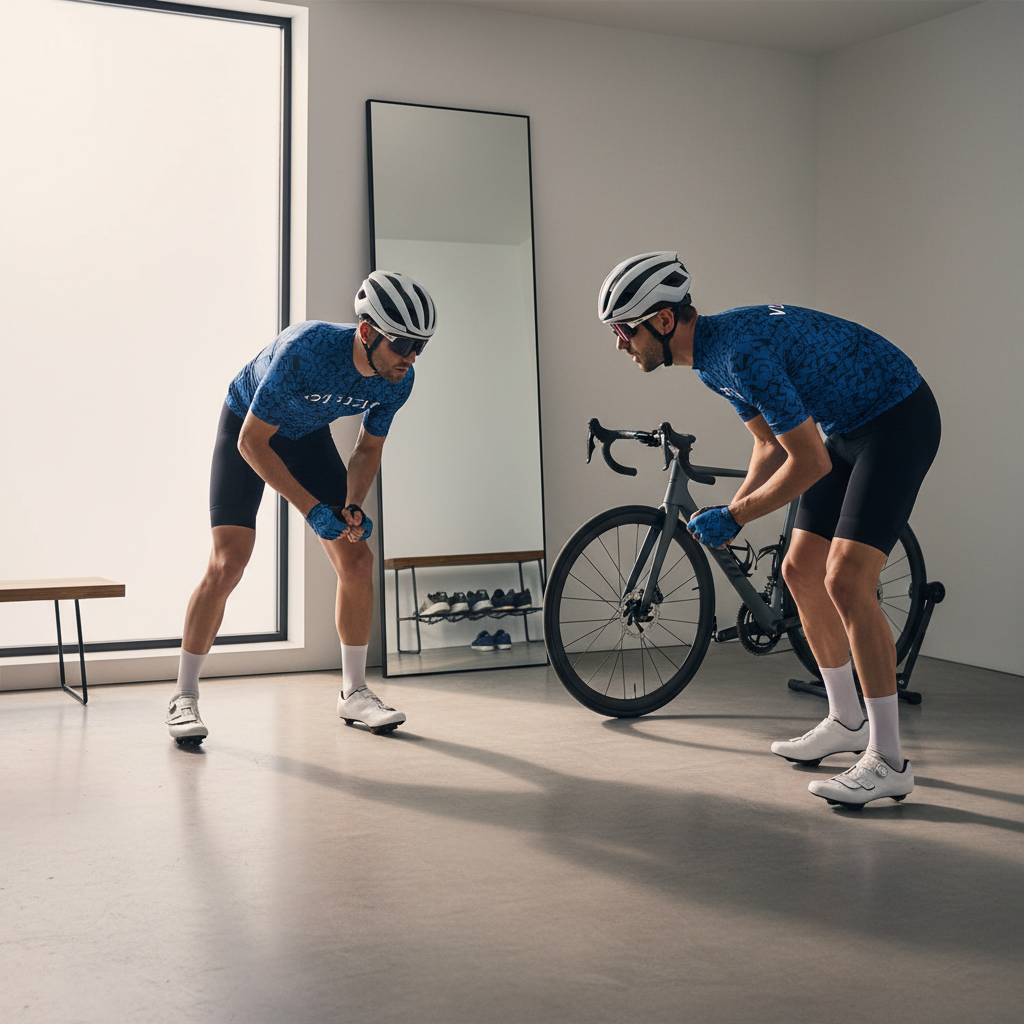
Even when numbers look right, the mirror test can lie because cycling jerseys are designed for a bent riding position. Do these checks in a slight forward hinge, arms reaching as if on hoods.
- Collar and zipper line: Lies flat, no buckling waves. Minor fabric texture is fine, big ripples suggest too tight.
- Shoulders: You can reach forward without pulling across the upper back.
- Sleeves: Grippers sit flat, don’t cut circulation, don’t flare out.
- Hem gripper: Stays put when you lift arms, doesn’t climb toward your ribs.
- Pockets: Empty pockets should lay close, not hang loose like a pouch.
If you can, load the pockets with something light, phone, small multi-tool, a gel, and see if the jersey sags or shifts. That test reveals a lot.
Common mistakes that make sizing feel “impossible”
Most sizing complaints repeat the same few patterns. Fix these and the process gets boring in a good way.
- Assuming your T-shirt size equals jersey size: Cycling cuts are purpose-built for riding posture.
- Ignoring fabric type: A thicker thermal jersey stretches differently than a summer mesh jersey.
- Not checking return policy before ordering: If you’re between sizes, easy exchanges save time and frustration.
- Buying ultra-aero sleeves when you hate tight arms: Some “laser-cut” sleeves feel great, others feel like a tourniquet depending on your build.
- Chasing a look over function: A slightly less tight jersey that you love wearing often beats a perfect-race-fit jersey you avoid.
Also, don’t overlook women’s and men’s pattern differences if you’re shopping across categories. Some riders prefer the opposite category for shoulder, chest, or hip proportions, and that’s fine if the fit checks out.
Real-world buying tips (online and in-store)
If you’re ordering online, you’re basically building a small process to avoid “random guessing.” It’s not glamorous, but it works.
Online: a low-drama sizing routine
- Confirm whether the chart uses body or garment measurements.
- Look for notes like “race fit” or “Italian cut,” which often signals a tighter silhouette.
- Compare your measurements to the chart, then decide based on your fit goal.
- If available, read the brand’s fit guide and fabric notes, not just star ratings.
- Order two sizes only if returns are simple and you’re truly between sizes.
In-store: what to check that sales floors don’t tell you
- Do the forward-lean fit check, not just standing upright.
- Zip fully, then simulate reaching to bottles in cages. Tightness often shows there.
- Ask if the jersey is designed for layering. Some “summer race” jerseys are meant to feel tight.
According to the Federal Trade Commission (FTC), it’s smart to review return and exchange terms before buying online, especially for apparel where fit uncertainty is common.
Conclusion: a simple way to choose confidently
how to choose a cycling jersey size gets much easier when you stop treating the size label like the truth and start treating it like a starting point. Measure chest and waist carefully, decide your target fit, then use the chart to choose the size that matches your riding reality.
If you want one action step: pick one jersey you already like, note where it feels right and where it annoys you, then use that insight to guide whether you size up, size down, or switch to a different cut next time.