
Core Workout is one of the fastest ways beginners can feel stronger in daily life, but it also turns into back pain and frustration when people treat it like “just do more crunches.”
If your goal is a flatter midsection, better posture, or simply feeling more stable when you lift groceries or sit at a desk, the right core plan pays off, but it needs the right exercise choices and a realistic schedule.
This guide walks through what “core” actually means, how to pick beginner-friendly moves, a simple routine you can repeat, plus quick self-checks so you know whether you should scale up or scale down.
What “core” really means (and why beginners get it wrong)
Most people hear “core” and think abs. In training, your core is more like a stability system: abs, obliques, deep trunk muscles, glutes, hip muscles, and the muscles around your spine all work together to resist unwanted motion.
That’s why a good Core Workout for beginners often includes anti-extension (don’t let the lower back over-arch), anti-rotation (don’t twist), and anti-lateral flexion (don’t collapse sideways), not just flexion-based moves like sit-ups.
According to American Council on Exercise (ACE), core training supports the muscles that stabilize the spine and pelvis, which helps movement quality across many activities. Translation: you’re not just “working abs,” you’re practicing control.
Why your current ab routine might feel ineffective
If you’ve been doing random ab circuits and nothing changes, it’s usually one of these real-world issues.
- Too much spine bending: endless crunches can irritate some backs, especially with poor control or fatigue.
- Going too hard too soon: long planks with shaky form often train compensation more than strength.
- No progression: repeating the same 3 moves at the same reps stalls quickly.
- Skipping breathing/bracing: if you can’t create trunk tension, your hips or lower back “steal” the work.
- Expecting fat loss from core work alone: visible definition depends heavily on overall nutrition and activity, not just ab volume.
The fix is not fancy exercises, it’s a better mix of movement patterns, cleaner form, and a plan you can repeat for a few weeks.
Quick self-check: choose the right starting level
Use this checklist before you copy an advanced routine from social media.
- You’re ready for a standard plank if you can hold 20–30 seconds with quiet breathing, no low-back pinch, and hips not sagging.
- You should modify to knees if your lower back arches, shoulders shrug, or you hold your breath to survive the set.
- You should avoid aggressive sit-ups for now if you feel sharp back discomfort, hip flexors cramping, or neck strain.
- You’re likely under-bracing if you can’t exhale through pursed lips while keeping your torso stiff.
- Check your daily baseline: if sitting triggers back tightness, prioritize anti-extension work and glute support before adding volume.
If you have a recent injury, post-surgery history, pregnancy/postpartum considerations, or persistent pain, it’s smart to consult a qualified professional before pushing intensity.
The best core workout routine for beginners (20 minutes, no equipment)
This Core Workout uses simple moves that teach stability first, then adds controlled motion. Do it 2–3 times per week on non-consecutive days.
Warm-up (3–4 minutes)
- 90/90 breathing: 5 slow breaths, exhale fully, feel ribs come down
- Cat-cow: 6–8 gentle reps, no forcing range
- Glute bridge: 8 reps, pause 1 second at the top
Main circuit (repeat 2–3 rounds)
Rest: 30–60 seconds between exercises, 1–2 minutes between rounds. Stop 1–2 reps before form breaks.
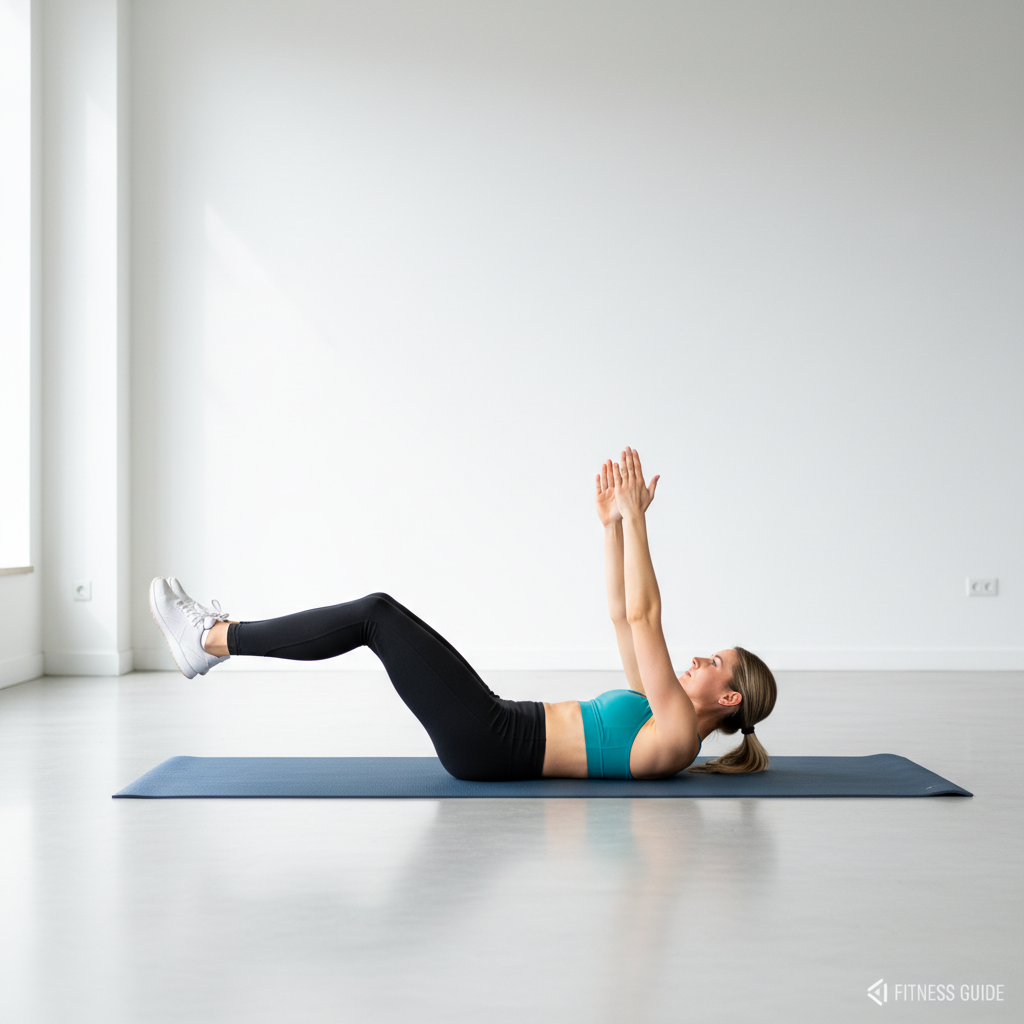
- Dead bug: 6–10 reps per side
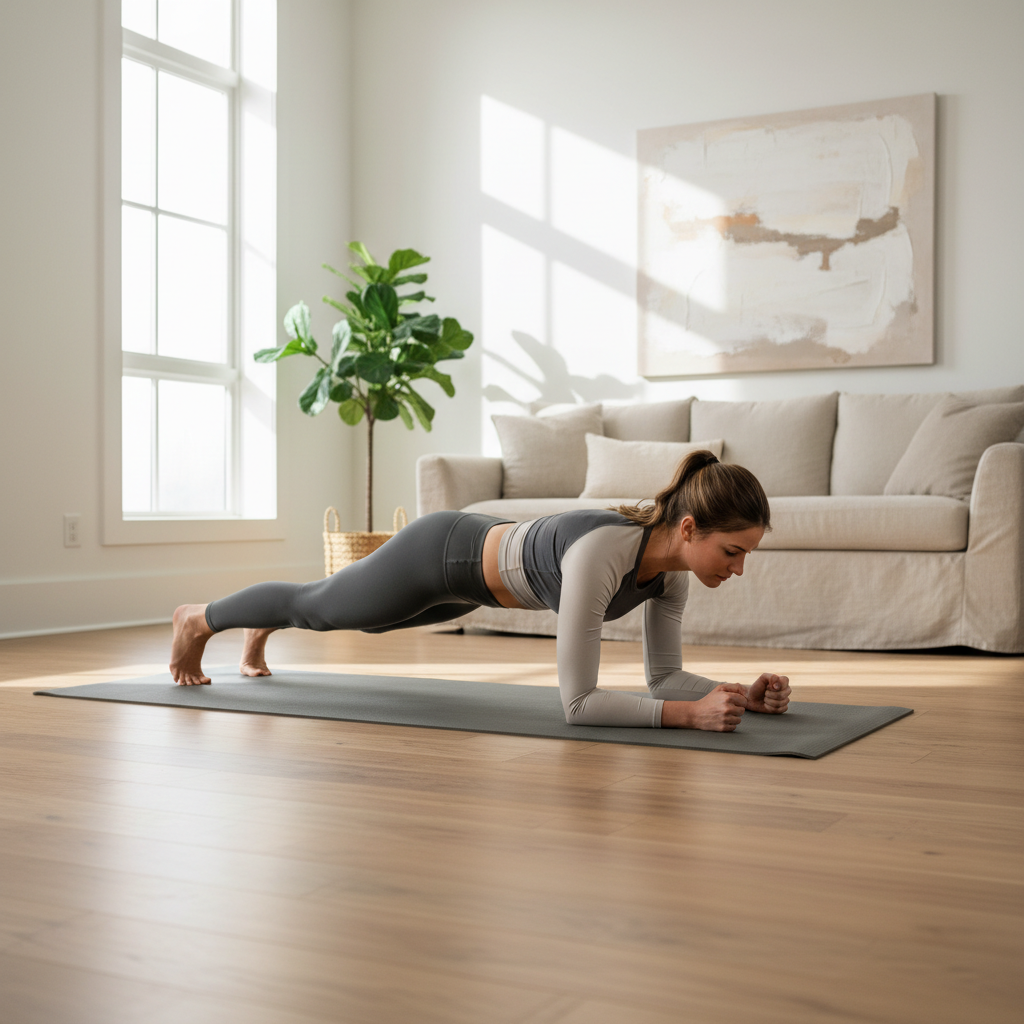
Cue: low back stays heavy on the floor, exhale as the leg extends. - Forearm plank (or knees plank): 20–40 seconds
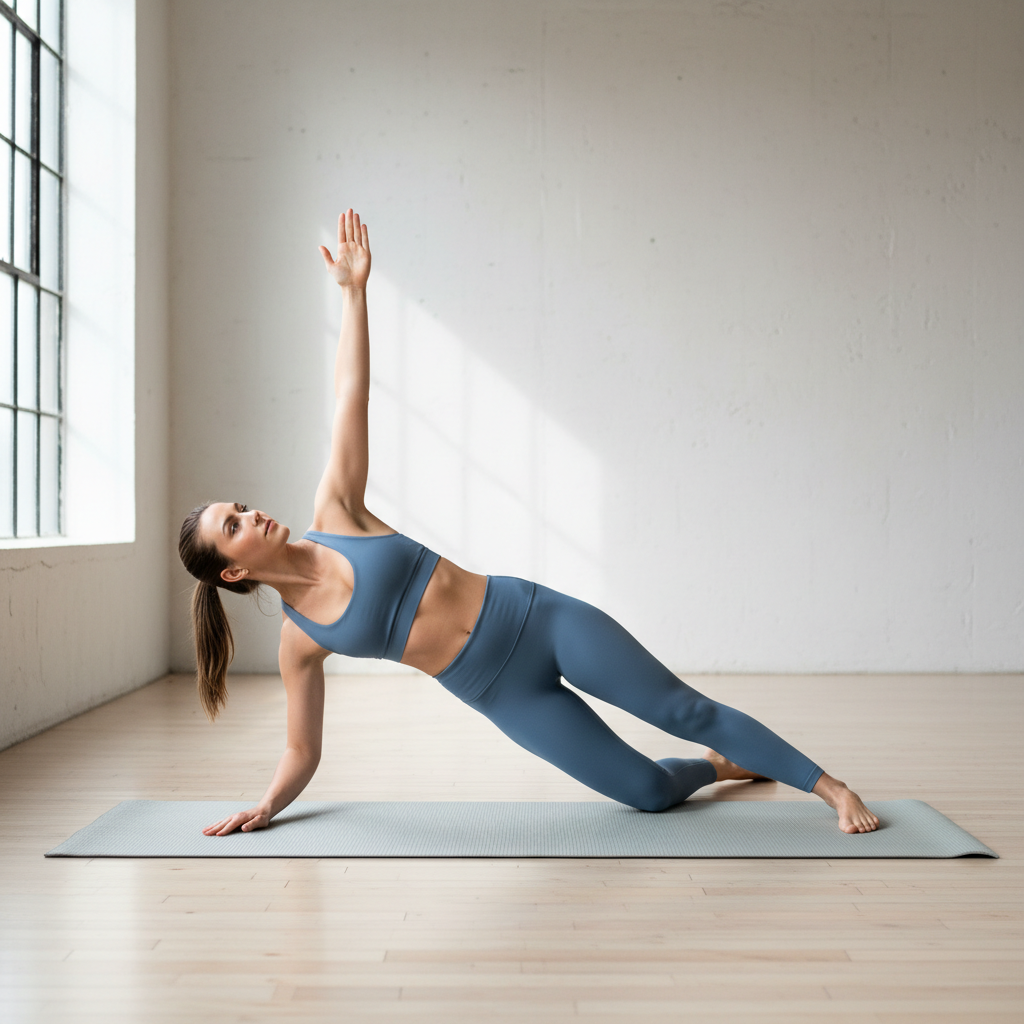
Cue: ribs down, glutes lightly on, push the floor away. - Side plank (or side plank from knees): 15–30 seconds per side
Cue: don’t rotate chest toward the floor, keep a straight line shoulder-to-hip. - Glute bridge march: 6–10 reps per side
Cue: hips stay level, move slow, no rocking. - Bird dog: 6–8 reps per side, 2-second pause
Cue: reach long, avoid twisting, imagine balancing a glass on your back.
Optional finisher (choose one)
- Hollow hold tuck: 10–20 seconds
- Mountain climber slow: 20–30 seconds (control over speed)
Progression plan: how to improve week to week without guessing
Beginners often jump from “I can barely plank” to “I’ll do 3 minutes.” A cleaner approach is to progress one variable at a time.
| What to progress | Beginner target | When to progress | Next step |
|---|---|---|---|
| Time (planks) | 20–40 sec | Form stays stable for all sets | Add 5–10 sec per week |
| Reps (dead bug/bird dog) | 6–10 per side | No back arch, smooth breathing | Add 1–2 reps per side |
| Leverage | Knees plank/side plank | You can “own” the position | Move to toes/longer legs |
| Rounds | 2 rounds | Energy stays steady, no sloppy final set | Add a 3rd round |
A useful rule: if you’re shaking so much you can’t breathe, that’s usually not “good burn,” it’s a signal to scale down and build cleaner tension.
Practical technique cues that protect your back
Most core work should feel like effort around the midsection, not a pinch in the low back or a neck strain. These cues help in many situations.
- Exhale to brace: breathe out like you’re fogging a mirror, feel ribs come down, then keep that tension as you move.
- Neutral spine beats “flattened”: you’re aiming for controlled alignment, not forcing your back into the floor at all costs.
- Glutes lightly engaged: especially in planks, a little glute tension reduces low-back takeover.
- Slow your reps: if your hips swing in dead bugs or bird dogs, you’re going too fast for your current control.
According to National Academy of Sports Medicine (NASM), core stability training focuses on maintaining proper alignment while resisting forces. In plain terms, “can you stay solid while your arms and legs move.”
How to fit a core workout into a beginner weekly plan
Core training works best when it supports your main training, not when it exhausts you before everything else.
- If you lift weights: do 8–12 minutes of core at the end of 2 sessions per week, keep it crisp.
- If you run or do cardio: do the full 20-minute routine 2–3 times per week, ideally on easier days.
- If you sit all day: add a 3-minute “mini core” on off-days: 1 set dead bug, 1 set side plank from knees, 1 set glute bridge.
Consistency usually beats intensity here. A moderate Core Workout you repeat for 6–8 weeks tends to outperform a brutal week-one program you quit by week two.
Common mistakes (the stuff that quietly ruins results)
- Chasing soreness: soreness is not a reliable indicator of effectiveness, especially for stabilization work.
- Holding your breath: it spikes effort and can reduce control, keep breathing even if it feels harder at first.
- Letting shoulders do the job: in planks, people shrug and load the neck, keep shoulder blades “wide” and stable.
- Going straight to weighted flexion: adding weight to sit-ups before you own bracing can irritate backs in many cases.
- Only training the front: ignoring side and anti-rotation patterns leaves gaps you feel in real life movements.
When to get professional help (and what to ask for)
If you feel numbness, tingling, radiating pain down the leg, or pain that worsens day to day, it’s worth pausing and getting assessed. The goal is not to “push through” something that might need a different approach.
In the gym setting, a certified trainer can help you dial in plank alignment, breathing, and exercise selection. In a medical context, a physical therapist can screen pain triggers and guide a return-to-exercise plan. If you’re unsure which you need, a primary care clinician can be a reasonable first stop.
Key takeaways (so you know what to do next)
- A beginner Core Workout should prioritize stability with planks, side planks, dead bugs, and bird dogs before high-rep sit-ups.
- Progress slowly and clearly: time, reps, leverage, then rounds, not all at once.
- Breathing and bracing matter as much as exercise choice, sometimes more.
- 2–3 sessions per week is enough for most beginners if you stay consistent.
If you want a simple start, do the routine above twice this week, take notes on what felt unstable, then adjust one move at a time. That small feedback loop is how core training stops being random and starts working.
FAQ
How long should a beginner Core Workout be?
Many beginners do well with 10–20 minutes, 2–3 times per week. If form stays clean, you can add a round or a few seconds over time, but more is not automatically better.
Is it okay to do core workouts every day?
Light core work can be fine daily, but harder stabilization sets often benefit from rest days. If you notice your planks getting worse or your back feeling tight, reduce frequency and focus on quality.
What’s better for beginners: planks or crunches?
Planks usually teach bracing and spine control with less repeated bending, so they’re a common starting point. Crunches can still fit for some people, but they should stay controlled and pain-free.
Why do I feel core exercises in my hip flexors instead of abs?
That often happens when the pelvis tips forward or the movement turns into “lifting the legs” without trunk control. Shorten the range, slow down, and prioritize exhaling to bring ribs down before you extend the legs.
Can a Core Workout help lower back pain?
In some cases, building trunk and hip stability helps. But back pain has many causes, so if symptoms persist or worsen, it’s safer to consult a qualified clinician or physical therapist for individualized guidance.
How soon will I see results from core training?
Many people notice better stability and posture awareness within a few weeks if they practice consistently. Visible ab definition varies a lot and usually depends on overall training, sleep, and nutrition, not core work alone.
What equipment do I need for a beginner routine?
No equipment is required for the routine here. Later, a resistance band or cable can add anti-rotation work, but beginners can get plenty of benefit from bodyweight progressions.
If you’re trying to build a Core Workout habit without overthinking it, set a repeating schedule for two short sessions each week, keep the same five moves for a month, and only progress when your form looks calm, not frantic.