
Best bike seat cover for comfort usually comes down to one thing: matching the cover’s padding and shape to your riding style, not buying the thickest gel you can find. If your sit bones ache after 20 minutes, or you get numbness on longer rides, a seat cover can help, but only when it fits the saddle and doesn’t slide.
People care about this because discomfort is one of the fastest ways to quit riding, even when your bike is “fine” on paper. The tricky part is that pain can come from the cover, the saddle width, your shorts, or your bike fit, and the wrong cover can make pressure worse by bunching or creating hot spots.
This guide keeps it practical: what actually causes saddle discomfort, how to tell whether a cover is the right fix, and what to look for in 2026 materials and designs. I’ll also flag the common mistakes that waste money, like buying a “universal” cover that never stays centered.
What a seat cover can (and can’t) fix
A bike seat cover mainly changes pressure distribution and surface feel. It can reduce sharp pressure, smooth out seams on a worn saddle, and add a touch of shock absorption on rough pavement or gravel.
But it can’t fully compensate for a saddle that’s the wrong width, a nose that’s angled too far up, or a riding position that overloads soft tissue. According to International Society of Biomechanics publications on cycling posture, comfort and load depend heavily on contact points and alignment, which is why setup matters as much as padding.
- Good use case: you already like your saddle shape, but want less sting on bumps or longer rides.
- Maybe not: persistent numbness, sharp pain on one side, or discomfort that starts immediately.
- Borderline: commuting on an upright hybrid, where a moderate cover can help if it doesn’t raise you too much.
Why your current saddle feels uncomfortable
Most “my seat hurts” complaints land in a few buckets, and each bucket points to a different solution.
1) Wrong width for your sit bones
If the saddle is too narrow, you sink into soft tissue; too wide and it rubs. A cover won’t change width in a meaningful way, it only changes the top surface.
2) Too much squish (yes, that’s a thing)
Thick gel can feel amazing in a store, then feel worse after 30 minutes because you sink in and create pressure around the edges. Many riders end up chasing “more padding” when they actually need firmer support.
3) Heat, sweat, and chafing
Sticky surfaces, poor ventilation, and rough seams cause irritation. Here the material and cover shape matter as much as cushioning.
4) Bike fit and saddle angle
Small changes add up: a saddle nose tipped up a few degrees can increase pressure, and a too-high saddle can cause hip rocking and soreness. According to American Physical Therapy Association guidance on ergonomics and musculoskeletal strain, persistent pain is often linked to positioning and load management, so it’s worth checking setup if discomfort repeats.
Quick self-check: do you need a cover, a new saddle, or a fit tweak?
Use this as a fast filter before you buy anything. If two or more items land on the right side, a cover is usually a reasonable next step.
- Cover likely helps: saddle feels “almost right,” discomfort builds gradually, bumps feel harsh, saddle surface is worn or slippery.
- New saddle more likely: pain starts in minutes, you feel pinching at the sides, you can’t find a comfortable spot even after adjusting tilt.
- Fit check priority: numbness, one-sided pain, knee pain appears with saddle discomfort, you slide forward constantly.
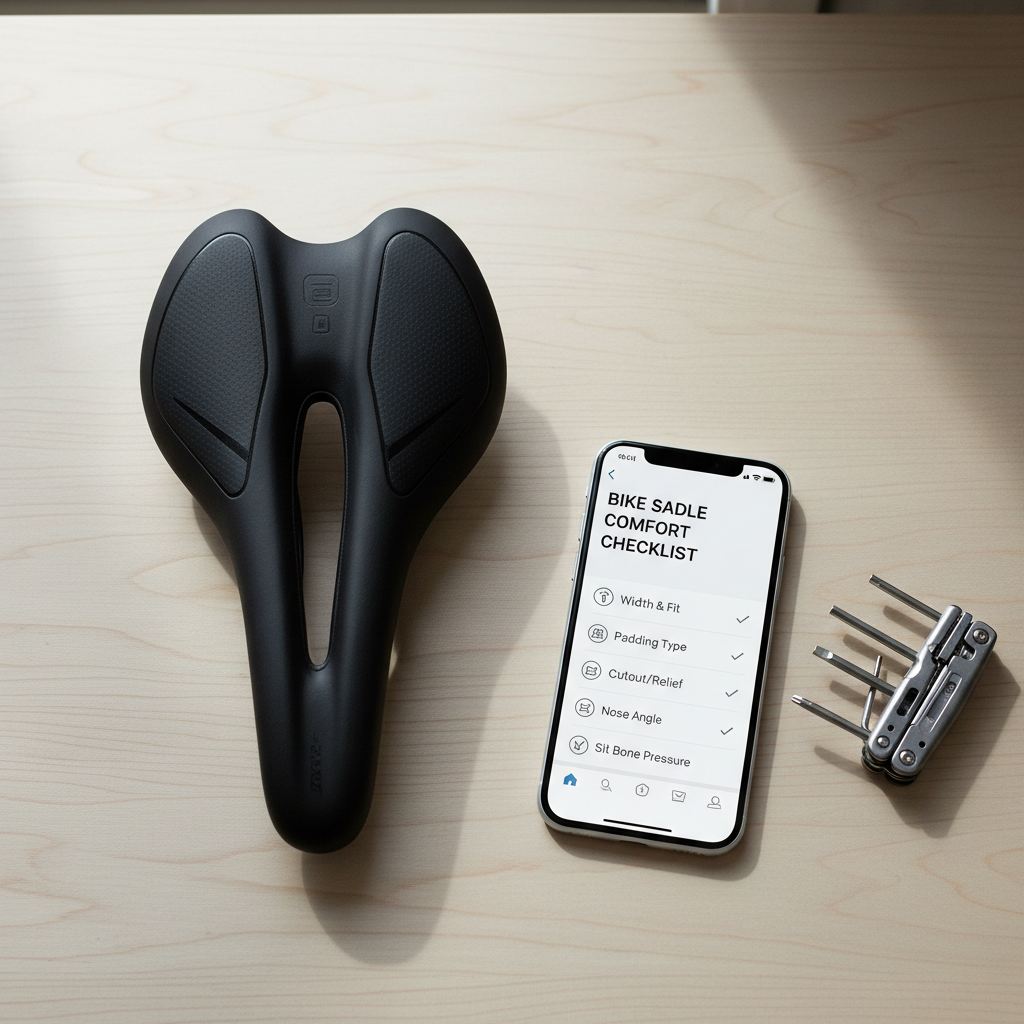
Key point: if numbness is your main complaint, don’t treat a cover like a guaranteed fix. Many cases improve more from angle/position changes, a pressure-relief channel saddle, or professional fit support.
How to choose the best bike seat cover for comfort in 2026
Shopping is easier when you commit to a few decisions: padding type, shape, attachment, and surface material. Here’s how to think about each one without overcomplicating it.
Padding: gel vs foam vs air
- Gel: often feels plush right away, good for casual rides, but can feel “mushy” on longer sessions if too thick.
- High-density foam: usually more stable, tends to work better for longer rides and for riders who dislike sink-in feeling.
- Air-cell designs: can reduce peak pressure, but sometimes feel bouncy and may require fiddling to prevent movement.
Shape: match your saddle, don’t fight it
Look for a cover that mirrors your saddle outline, especially the nose and rear corners. A cover that’s too wide bunches at the edges, then chafes.
Attachment: anti-slip matters more than you think
For comfort, stability is underrated. A cover that shifts even slightly can create friction points. Prioritize:
- grippy underside texture
- secure drawstring or hook-and-loop closure
- a snug fit that doesn’t wrinkle when you sit
Surface: breathability and seams
If you ride in heat, breathable mesh and smoother seam placement make a bigger difference than adding another centimeter of padding. This is where many “comfort” products quietly fail.
Comfort seat cover comparison table (what to buy for your riding style)
This table isn’t about brands, it’s about matching features to the way you ride, which is usually the deciding factor for the best bike seat cover for comfort.
| Riding scenario | Padding sweet spot | Material/finish to favor | What to avoid |
|---|---|---|---|
| Upright commuter / cruiser | Medium-thick gel or gel+foam | Breathable top, strong anti-slip base | Overly narrow “race” covers |
| Fitness hybrid, 30–90 min rides | Firm foam or thin gel layer | Low-friction surface, minimal seams | Very thick gel that raises your position |
| Road cycling, longer distances | Thin, firm foam (or none if saddle fits) | Smooth cover, stable attachment | Bulky covers that shift and chafe |
| Indoor cycling / spin | Medium foam, stable and sweat-friendly | Easy-clean, breathable, odor-resistant | Slippery tops that increase movement |
| Casual gravel / rough pavement | Foam or air-cell with good stability | Durable cover fabric, strong retention | Bouncy air cushions that wander |
Installation and setup tips that actually change comfort
A cover can be “right” and still feel wrong if it’s installed loosely or if it changes your effective saddle height.
- Pull it tight: install from the nose backward, remove wrinkles, then re-tighten after the first ride.
- Recheck saddle height: thicker covers raise you, even by a small amount, which may affect knee tracking. If your hips start rocking, lower the saddle slightly.
- Confirm tilt: keep tilt subtle; if you’re sliding forward, the nose may be down too far, if pressure spikes, it may be up too far.
- Pair with the right shorts: for rides over an hour, padded shorts often help more than adding more padding on the seat.
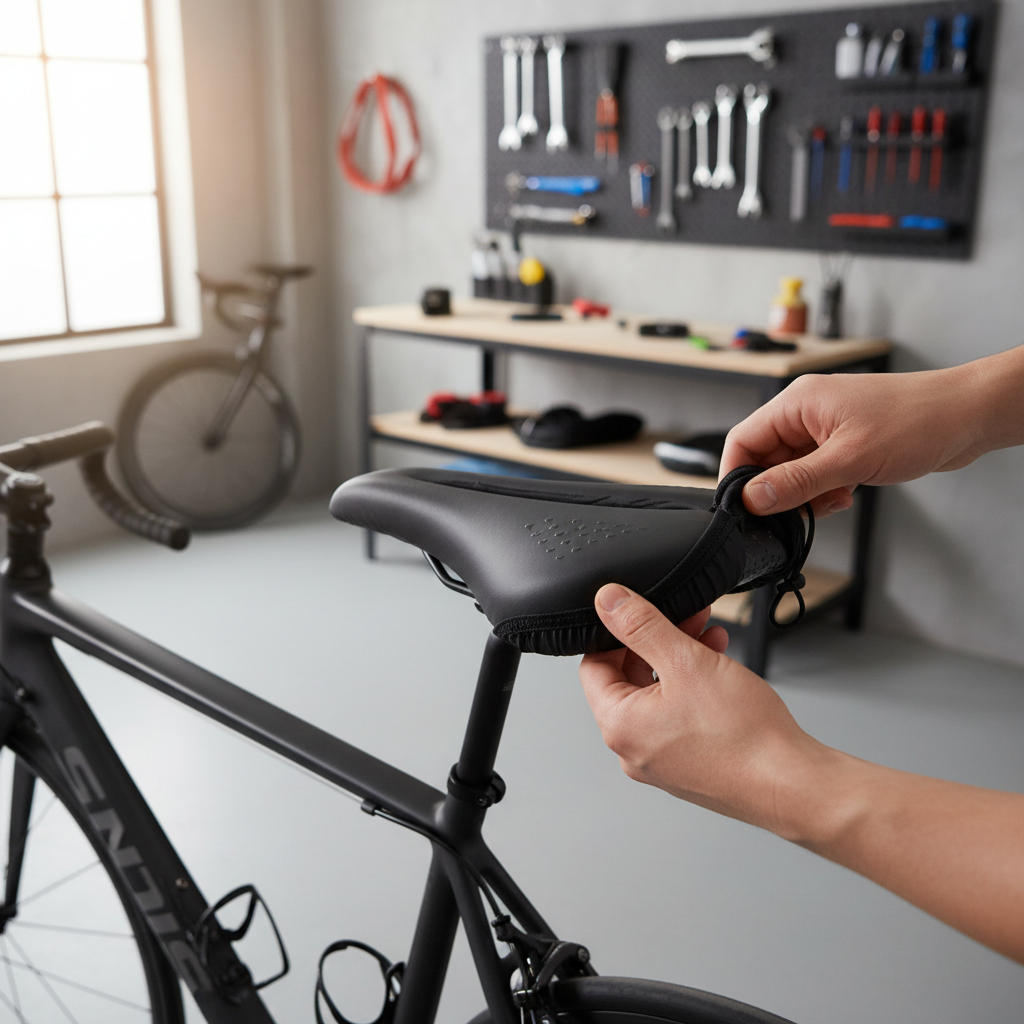
Small reality check: the “best” comfort setup often ends up being less padding than you expected, plus better stability and less friction.
Common mistakes to avoid (these waste the most time)
- Buying the thickest gel cover: it can increase pressure at the edges, and the extra height can change fit.
- Ignoring saddle width: if your sit bones don’t land on supportive areas, a cover won’t magically fix it.
- Letting the cover slide: shifting creates rubbing, and rubbing turns into soreness fast.
- Testing on one short ride: comfort problems often show up after 30–60 minutes, so do at least two longer rides before judging.
- Chasing comfort without checking angle: a small tilt adjustment can matter more than a product swap.
When to get help (and what “help” looks like)
If you have ongoing numbness, tingling, or pain that persists after rides, it’s smart to pause the trial-and-error cycle. According to Centers for Disease Control and Prevention (CDC) guidance on preventing injuries, persistent or worsening symptoms are a reason to consult a qualified professional; for cycling discomfort, that often means a bike fitter, physical therapist, or sports medicine clinician.
If you’re unsure where to start, a reputable bike shop fit check can be a practical middle step. It’s not always a full fit session, but even confirming saddle height and tilt can keep you from buying three covers you never use.
Conclusion: what to do next
If you want the best bike seat cover for comfort, prioritize stability and the right padding density over maximum thickness, then install it tightly and recheck saddle height. If discomfort shows up as numbness or sharp pain, treat a cover as only one part of the solution, and consider a fit or saddle change instead.
Action steps: measure your saddle length/width, pick a cover that matches the outline, then do two rides of your typical duration before deciding whether it’s a keeper.
FAQ
- How do I choose the right size seat cover?
Measure the saddle’s widest point and length, then compare to the cover’s size range. “Universal” works only when the range is tight and the underside grip is strong. - Is gel always more comfortable than foam?
Not always. Gel can feel softer, but foam often feels more supportive over time. Many riders end up preferring firmer padding for rides longer than an hour. - Can a seat cover reduce numbness?
It might, especially if numbness comes from harsh pressure points, but many cases relate to saddle shape, tilt, or reach. If numbness persists, consider a fit check or a relief-channel saddle. - Will a seat cover damage my saddle?
Usually no, but trapped moisture can speed wear on some materials. If you ride in rain or sweat heavily indoors, remove the cover to dry occasionally. - Do I need a seat cover if I already wear padded shorts?
Often you don’t. For longer rides, quality shorts solve more problems than stacking padding on the saddle, which can increase movement and friction. - Why does my seat cover keep slipping?
Common causes include a cover that’s slightly oversized, a smooth saddle surface, or a weak closure. Look for a grippy underside and re-tighten after the first ride.
If you’re trying to stop soreness without turning your bike into a couch, a simple checklist and a “fit-first” mindset usually saves time. If you want, share your bike type, typical ride length, and whether the issue is soreness vs numbness, and I can suggest what cover style is more likely to feel right.