
Best bike trailer for cargo shopping gets confusing fast because “capacity” numbers rarely match how the trailer feels on real streets, curb cuts, and tighter bike paths. The good news, you can pick a trailer that tracks straight, loads easily, and stays stable without overpaying for features you’ll never use.
If you’re hauling groceries, tools, a cooler for the park, or a weekly market run, the trailer becomes part of your routine, and small choices matter, hitch style, wheel size, where the weight sits, and how quickly you can detach it when you reach a rack.
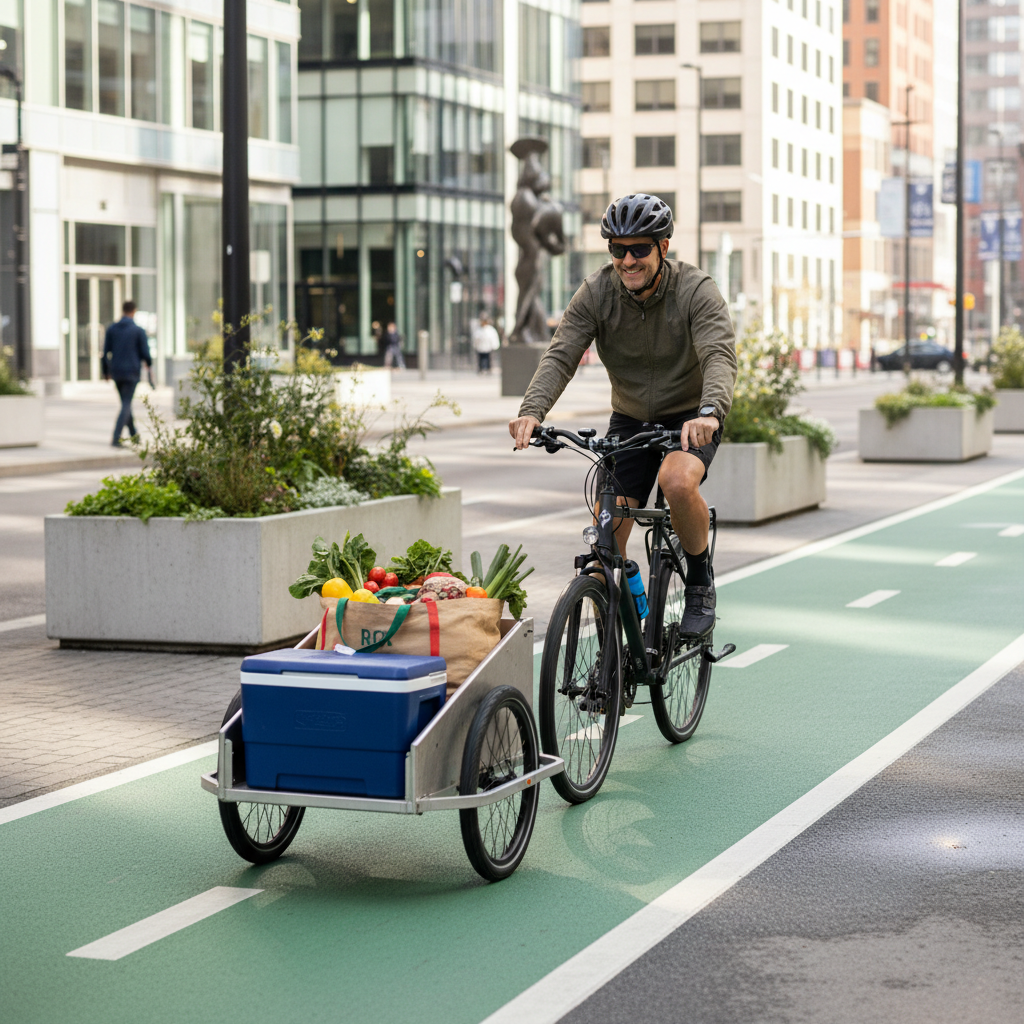
This guide focuses on what tends to make a trailer genuinely easier to live with in the US: stability on imperfect pavement, compatibility with common bikes and e-bikes, storage in smaller homes, plus the safety details people skip until something feels sketchy on the first downhill.
What “best” means for a cargo bike trailer in 2026
For most riders, “best” is a mix of safe handling, usable volume, and low hassle. You’re not just buying a box on wheels, you’re buying a system that has to behave behind your bike.
- Realistic hauling: weekly groceries, a couple of tote bins, a small dog crate, work gear, or light tools.
- Stability under braking: a good trailer stays calm when you slow down hard at intersections.
- Everyday practicality: quick attach, easy access, manageable storage, and parts you can replace.
- Bike fit: your axle type, dropout design, and e-bike torque can change which hitch works cleanly.
According to PeopleForBikes... safer streets and protected lanes increase comfort for people carrying loads by bike, but even on good infrastructure, trailers still need predictable tracking and strong visibility to keep interactions calm.
Quick comparison table: common cargo trailer types
Before brands and models, pick the architecture. Most “regret purchases” happen when someone buys the right price but the wrong type.
| Trailer type | Best for | Tradeoffs | What to check |
|---|---|---|---|
| 2-wheel open bed | Groceries, boxes, light hardware | Can rattle, load can shift if not strapped | Side rails, tie-down points, wheel quality |
| 2-wheel enclosed tub | Loose items, weather exposure, errands | Less modular for odd-shaped cargo | Lid/cover fit, drainage, internal anchors |
| 2-wheel soft-sided (convertible) | Errands + occasional kid/pet use | Fabric wear, more parts to maintain | Frame stiffness, zipper quality, ventilation |
| 1-wheel cargo | Narrow trails, bikepacking | Balance feel differs, packing needs care | Wheel size, axle strength, sway control |
Buying criteria that actually matter (and why)
If you want the best bike trailer for cargo for daily US riding, these are the criteria that tend to show up in real use, not just on spec sheets.
1) Hitch design and bike compatibility
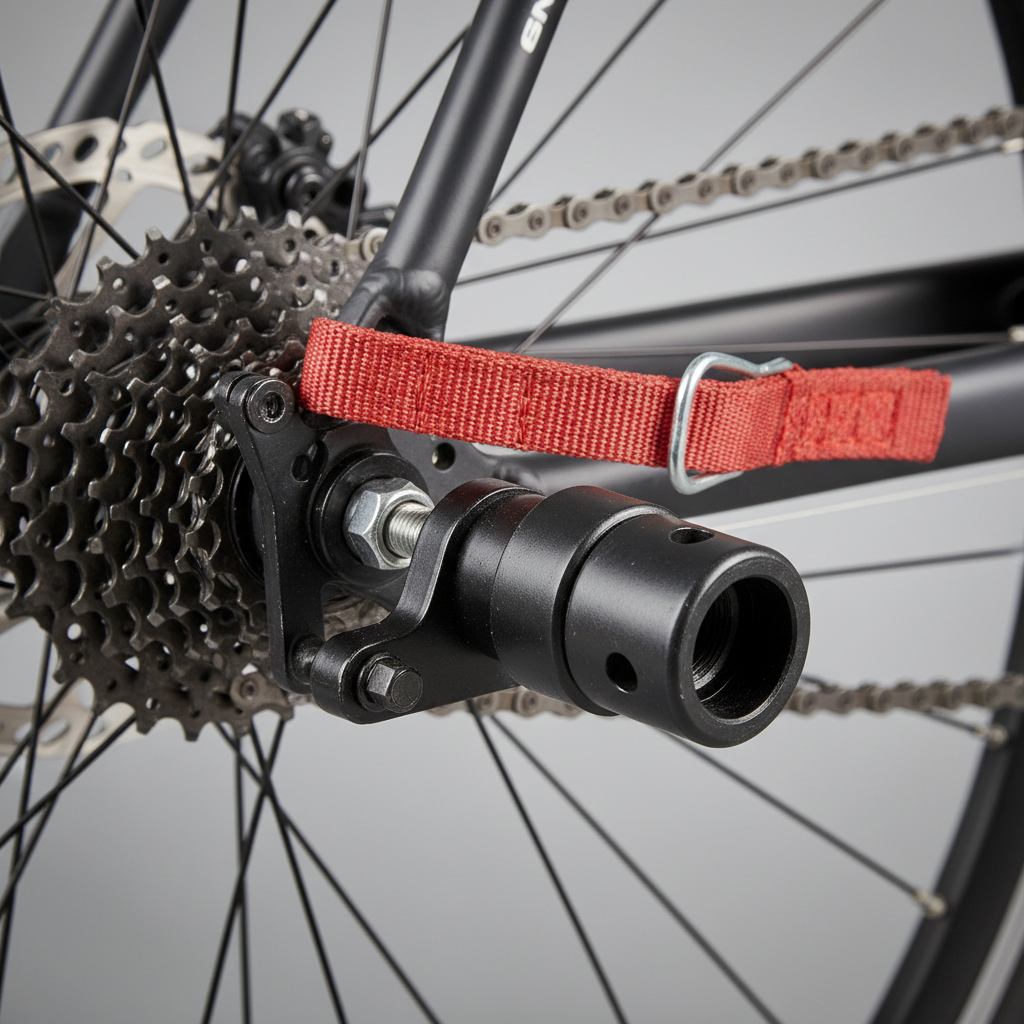
Most consumer cargo trailers use a rear-axle or chainstay-area hitch with a flexible coupler. That flexibility helps turns feel smooth, but it also means the hitch hardware matters.
- Axle type: quick release skewers, thru-axles, and nutted axles can require different adapters.
- E-bike considerations: higher acceleration and weight can expose flex, creaks, or loose hardware faster.
- Heel clearance: smaller frames sometimes clip the hitch arm, especially with panniers.
According to NHTSA... being visible and predictable in traffic reduces crash risk; in practice, a stable hitch that prevents fishtailing helps you stay predictable for drivers and other riders.
2) Wheel size, tires, and bearing quality
Cheaper trailers often “work” until you hit rough pavement, then you feel the bounce travel into the bike. Larger wheels can smooth gaps, but a well-built smaller wheel can still ride nicely if the tire and bearings are decent.
- Pneumatic tires usually ride calmer than hard plastic.
- Common sizes are easier to replace at local shops.
- Sealed bearings often handle wet commutes better than basic bushings.
3) Load placement and center of gravity
The easiest way to make any trailer feel unstable is stacking weight high. Low-and-centered loads track straighter and brake better.
- Put dense items (cans, tools, batteries) low and between the wheels.
- Use two straps, one front-to-back, one side-to-side.
- Avoid “tall tower” loads unless your trailer has high side rails and a solid base.
4) Brakes: often optional, sometimes worth it
Most cargo trailers don’t include brakes. Many riders do fine without them on flatter routes, but hills change the equation. If you regularly descend with heavy loads, a trailer with braking support or higher-rated construction can feel more controlled.
For safety questions specific to your body, bike, or route, it’s reasonable to ask a local shop for a quick fit check, especially if you’re pairing a heavy trailer with an e-bike.
2026-ready picks: best cargo bike trailer profiles by use case
I’m not going to pretend there’s one trailer that wins for everyone. Instead, here are the profiles that most shoppers end up happiest with, and what to look for when comparing models in that lane.
Best for weekly grocery runs and errands (most people)
- Type: 2-wheel enclosed tub or open bed with rails
- Why it works: stable, forgiving to pack, easy to park
- Look for: quick-detach hitch, internal tie points, weather cover option, reflective panels
If your goal is the best bike trailer for cargo for routine errands, prioritize a trailer that loads fast and doesn’t require a packing strategy every time.
Best for bulky items (Costco-style runs, boxes, coolers)
- Type: 2-wheel flatbed/open bed with side rails
- Why it works: flexible shapes, easy strap-down
- Look for: strong deck, multiple lashing points, wheel guards to prevent rubbing
Best for mixed use (cargo + occasional kid/pet duty)
- Type: soft-sided convertible trailer
- Why it works: weather protection plus storage pockets
- Look for: sturdy frame, good ventilation, washable floor, parking brake
Just be honest about frequency. If it’s 95% cargo, a cargo-first trailer with a cover often feels less fiddly.
Best for narrow trails and bikepacking-style loads
- Type: 1-wheel cargo trailer
- Why it works: tracks in line with the bike on narrow paths
- Look for: robust hitch, durable wheel, low sway under load
Self-check: which trailer category fits you in 2 minutes
If you’re stuck between two options, answer these with your real week, not your aspirational one.
- Your route: mostly flat bike lanes, or regular hills and fast descents?
- Storage at home: do you need it to stand upright, fold, or fit a closet?
- Bike hardware: quick release, thru-axle, or unusual rear end on an e-bike?
- Load pattern: one big trip per week, or smaller daily pickups?
- Weather exposure: do you ride when it’s wet, or do you wait for clear days?
Two hints that save money: if you ride in rain, plan for a cover and corrosion-resistant hardware; if you have a thru-axle, confirm adapters exist before you order.
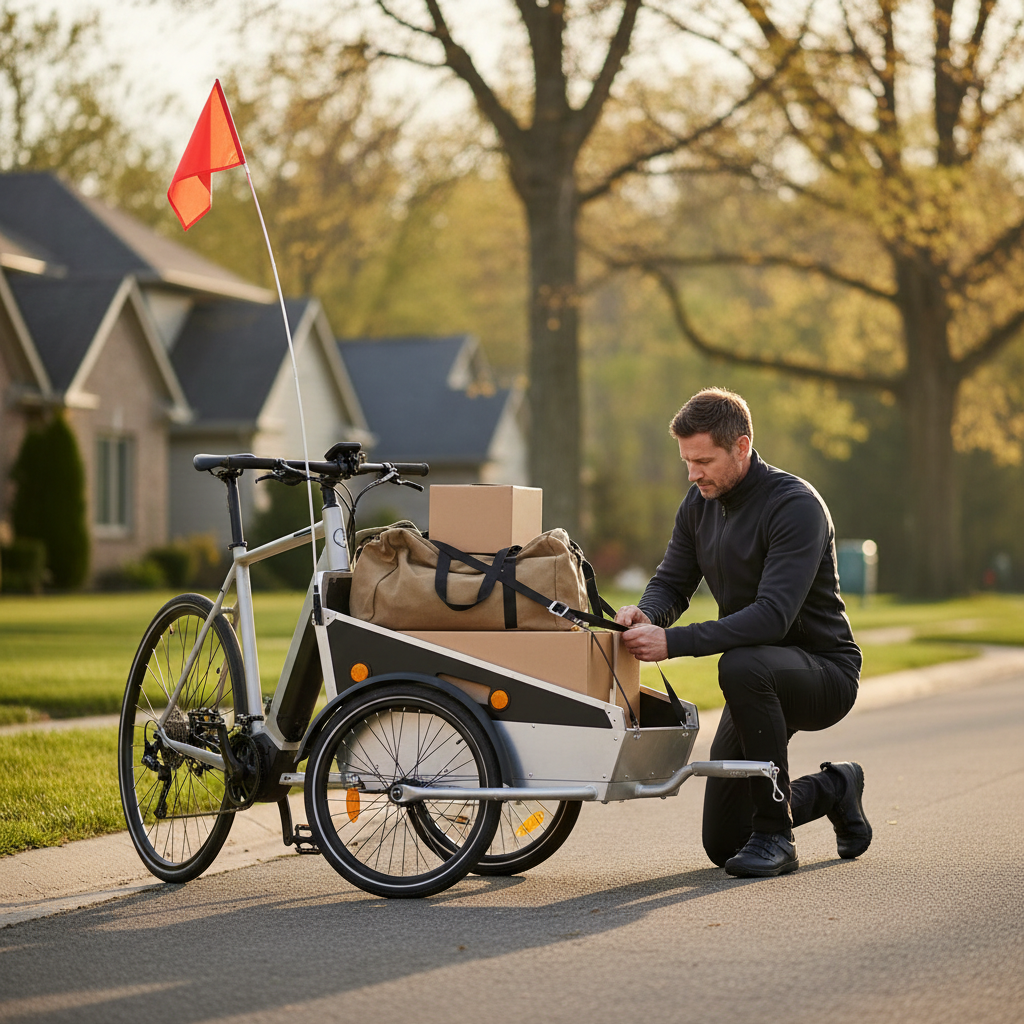
Setup and hauling tips that prevent wobble and broken eggs
The trailer can be excellent and still feel bad if setup is sloppy. These steps are boring, but they’re what separate “this is easy” from “why does this feel sketchy.”
Attach it like you mean it
- Torque axle nuts or skewer tension correctly, if you’re unsure, a bike shop can confirm in minutes.
- Add the safety strap or secondary retention if included, don’t skip it.
- Do a short parking-lot test: tight turns, hard stop, curb cut at low speed.
Pack for stability, not just for space
- Heavy items low, lighter items on top.
- Keep weight centered left-to-right to reduce pull.
- Use a tote bin inside the trailer if you hate chasing small items.
Ride like you’re towing
- Brake earlier than normal, especially in wet conditions.
- Take corners wider, the trailer tracks inside the bike’s path.
- Watch for bollards and pinch points, the trailer adds width you’ll forget once, then never again.
Common mistakes (that look small until they cost you)
- Buying for max capacity only: a tall, unstable load rating doesn’t help if the trailer feels twitchy on your route.
- Ignoring adapter needs: thru-axle bikes often need specific hitch hardware.
- Skipping visibility: add reflectors and a flag if your trailer doesn’t come well-equipped.
- Overinflating tires: too hard can bounce cargo and reduce traction; follow the tire’s recommended range.
- No strap plan: the best cargo trailer still needs tie-downs for odd loads.
According to CPSC... consumer product safety guidance often emphasizes following manufacturer instructions and using products as intended; with trailers, that usually means respecting weight limits and securing loads so they can’t shift into the wheels.
Key takeaways (bookmark this)
- Match the trailer type to your cargo, tub for loose items, flatbed for bulky shapes, 1-wheel for narrow trails.
- Hitch compatibility matters as much as capacity, especially with thru-axles and e-bikes.
- Low, centered loads reduce sway and make braking feel calmer.
- Test rides in a safe area catch issues before your first real errand run.
Conclusion: choosing the best cargo bike trailer for your routine
The best bike trailer for cargo is the one you’ll actually use because it attaches cleanly, hauls what you buy most weeks, and stays stable when roads get rough. If you want one simple next step, measure the space where you’ll store it and confirm your rear axle type, those two checks eliminate a lot of bad options early.
If you’re deciding between two finalists, pick the one with better hitch support and easier tie-downs, you’ll feel that benefit every ride, not just on the first day.
FAQ
- What size bike trailer do I need for groceries?
For many households, a mid-size 2-wheel cargo trailer handles weekly groceries comfortably, but it depends on whether you buy bulky items like paper goods. If you regularly haul big boxes, prioritize deck space and tie-down points over “liter” claims. - Will a cargo trailer work with my e-bike?
Often yes, but check axle type, hitch adapter availability, and the e-bike maker’s guidance on towing. If your e-bike has a thru-axle or unusual dropout hardware, confirm compatibility before ordering. - Is a 1-wheel cargo trailer safer than a 2-wheel trailer?
Not automatically. One-wheel models can track nicely on narrow paths, but packing and sway control matter a lot. Two-wheel models tend to feel more stable at stops and during loading. - How much weight can I tow behind a bicycle?
It varies by bike frame, wheels, brakes, and the trailer rating. Stay within manufacturer limits and consider your route, hills and wet descents can make a “legal” load feel excessive. When in doubt, ask a local shop. - Do I need trailer brakes?
Many riders skip them on flatter routes with moderate loads. If you descend hills with heavy cargo, brakes or a higher-stability setup can feel more controlled, and it may be worth prioritizing. - What’s the biggest cause of trailer wobble?
Loose hitch hardware, uneven left-right loading, or weight stacked high tend to cause wobble. A quick re-pack and proper strap tension often fixes it faster than changing tires. - Can I bring a cargo trailer on bike paths?
Many paths allow them, but width rules and etiquette vary by city or park system. If the path has tight bollards, measure your trailer width and practice slow turns before a busy weekend ride.
If you’re trying to narrow down options and want a more “buy once” approach, it can help to list your top three cargo items, your steepest hill, and your axle type, then filter trailers by hitch compatibility and real tie-down utility rather than headline capacity.