
The best bike helmet for kids safety is the one that fits your child’s head correctly, sits level, stays put when they move, and meets a recognized safety standard—before you worry about colors, brands, or the newest feature.
Most parents aren’t stuck because they don’t care, they’re stuck because helmets are confusing in real life: sizing varies, kids resist straps, and online “best lists” rarely explain how to choose for your riding situation. A great helmet that gets left on a hook does nothing.
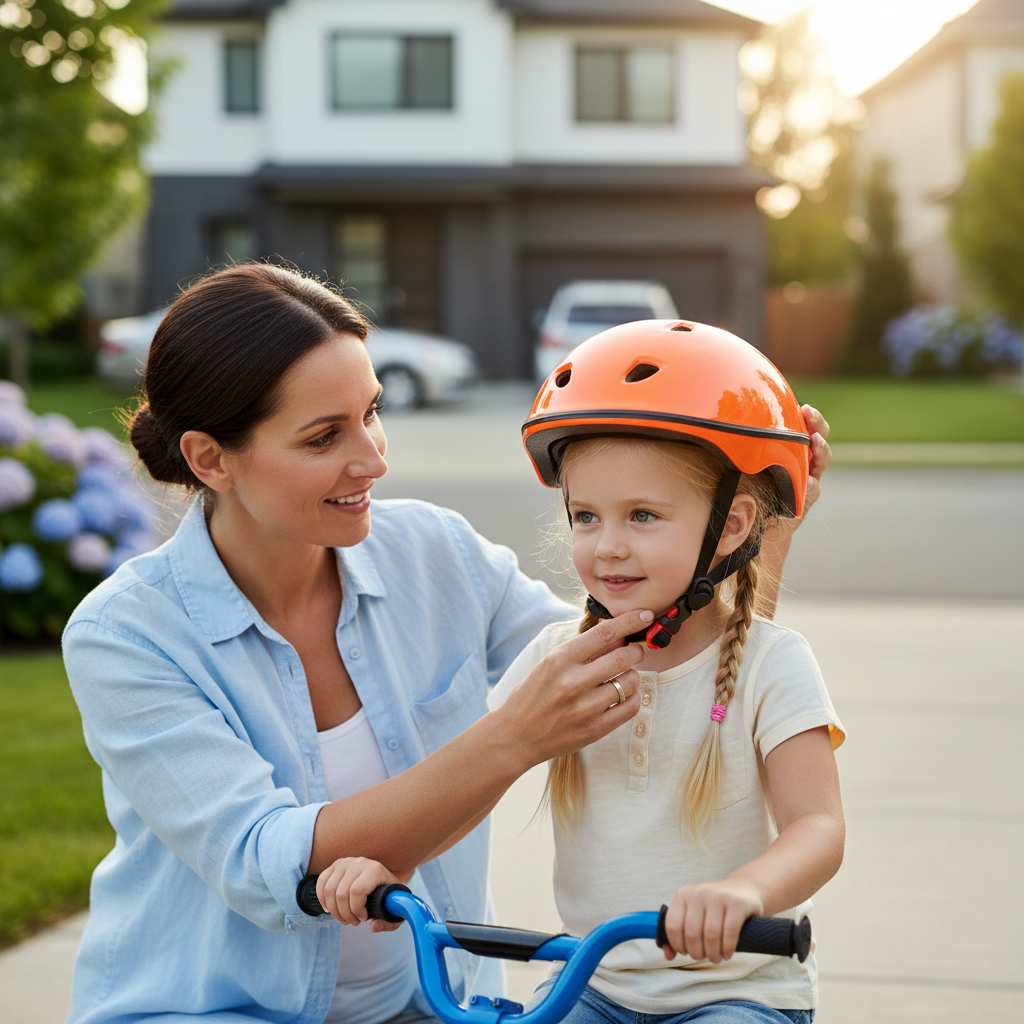
This guide is built around decision points that actually prevent injuries: certification, correct fit, coverage, strap geometry, and how your kid rides. You’ll also get a quick self-check list, a comparison table, and a simple “buying script” you can use in-store or online.
What “best” really means for kids helmet safety
When people search for the best bike helmet for kids safety, they usually mean “the most protective.” In practice, protection comes from a few non-negotiables working together.
- Meets a safety standard: In the U.S., look for CPSC compliance for bicycle helmets. According to U.S. Consumer Product Safety Commission (CPSC), bicycle helmets sold in the U.S. must meet the federal safety standard.
- Fits your child’s head shape and size: A safe helmet should feel snug all the way around, not tight in just one spot.
- Sits level and stays stable: If it tips back, your child’s forehead can be exposed; if it shifts side-to-side, impact management may be compromised.
- Comfort that encourages consistent use: Ventilation, weight, and strap comfort often decide whether the helmet gets worn every ride.
One more nuance: more expensive doesn’t automatically mean safer. Often you’re paying for comfort, adjustability, a lower profile, or convenience features, which can still matter a lot because they improve wear compliance.
Key safety features to prioritize in 2026
Helmets haven’t changed overnight, but the market keeps nudging toward better adjustability and rotational-impact features. Here’s what tends to be worth paying attention to.
Certification and labeling
Start with the inside label. For standard kids bike riding on roads and paths, CPSC is the baseline in the U.S. If you’re buying from a marketplace listing, verify the label and the brand’s legitimacy—counterfeit safety gear is a real concern in many categories.
Rotational impact systems (often marketed as MIPS or similar)
Some helmets include a slip-plane or similar design intended to reduce rotational forces in certain angled impacts. According to Virginia Tech Helmet Lab, their helmet ratings incorporate STAR values aimed at evaluating concussion risk reduction across impacts, and many higher-rated models include rotational-management designs. This doesn’t make non-rotational helmets “unsafe,” but it can be a meaningful differentiator if it fits your budget and your child will wear it.
Coverage and shell design
Many kids helmets now offer deeper coverage around the temples and back of the head. That can be helpful for newer riders who tip over at low speed, though you still need the helmet to sit level and not block vision.
Buckle comfort and pinch resistance
Small detail, big outcome. If your child hates the buckle because it pinches, you’ll fight the helmet every ride. Look for a comfortable buckle shape and soft strap webbing.
Quick fit test: a simple checklist before you buy
This is the part most “best helmet” articles skip, but it’s usually the deciding factor. Run this fit test at home or in the store.
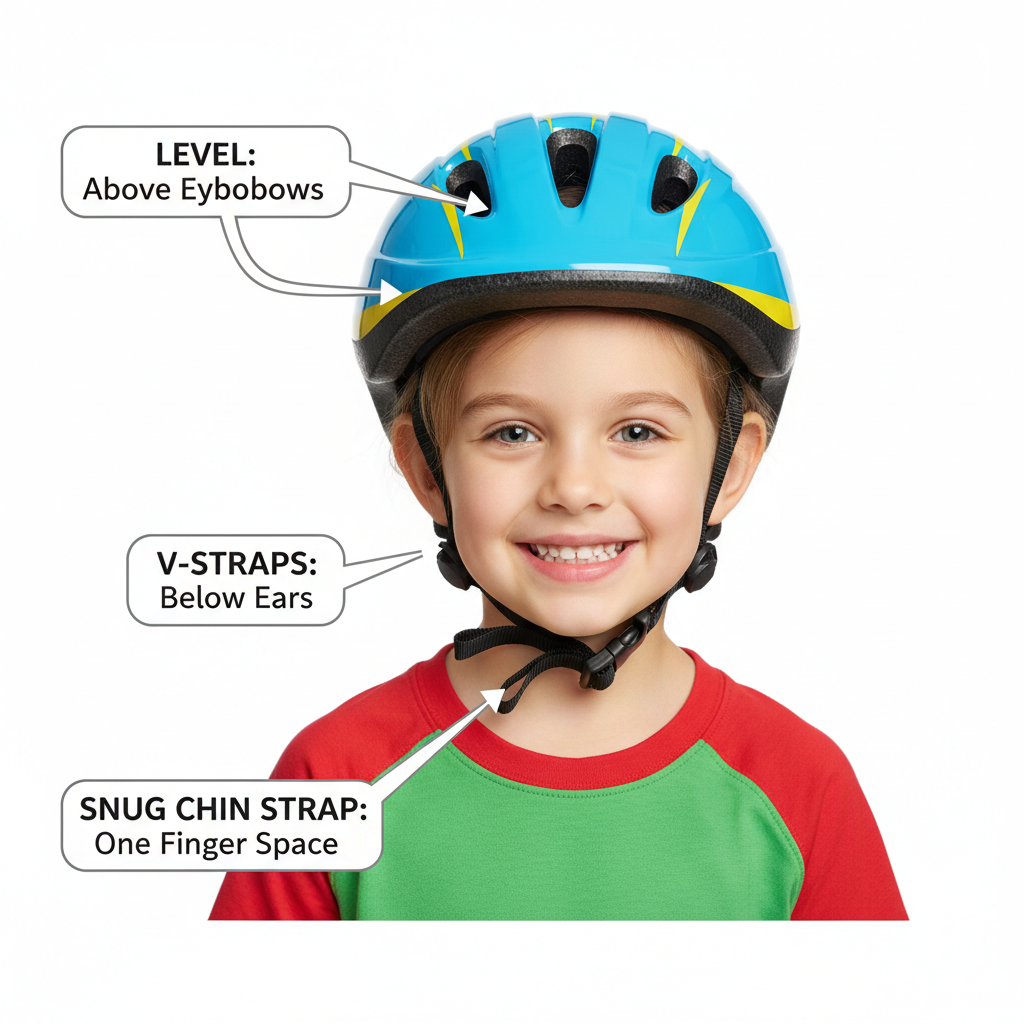
- Level: Front edge sits about 1–2 finger widths above eyebrows, not tilted back.
- Snug all around: No big gaps at the sides; no pressure point on the forehead.
- Shake test: With straps unbuckled, the helmet shouldn’t slide easily when your child shakes their head.
- V-shape straps: Side straps form a “V” under each ear, symmetrical left and right.
- Buckle and tension: Buckle sits centered, chin strap snug enough that you can fit about one finger between strap and chin.
- Vision check: Child can look up without the helmet blocking their view.
If you can’t make it stable without overtightening, it’s usually the wrong size or the wrong head shape match. That’s when switching models matters more than tweaking straps forever.
Comparison table: which kids helmet style fits your riding scenario?
Not every kid needs the same kind of helmet. Use the riding context to narrow choices, then fit-test the finalists.
| Riding situation | What to prioritize | Nice-to-have | Watch-outs |
|---|---|---|---|
| Neighborhood rides, bike path | CPSC, easy adjuster, good ventilation | Rotational feature (MIPS-type) | Helmet sits too high or rocks on head |
| Balance bike / first-time rider | Deeper coverage, stable fit | Pinch-resistant buckle | Overbuilt “cool” helmet that feels heavy |
| Family rides with longer distances | Comfort, low pressure points | Sweat padding set, ponytail-friendly design | Hot helmet leads to frequent removal |
| Bike to school / daily use | Durability, easy on/off, reflective details | Rear light compatibility | Loose straps after repeated adjustments |
| Skatepark/multi-sport (if allowed by label) | Correct certification for the activity | Hard shell feel, robust pads | Don’t assume one helmet covers all sports |
How to choose the right size (and avoid common sizing traps)
Sizing issues are the #1 reason parents think a helmet “doesn’t work.” Two helmets can both claim “50–54 cm” and still fit very differently.
Measure first, then interpret the range
- Use a soft measuring tape around the largest part of the head, usually about 1 inch above eyebrows.
- If your child measures near the top end of a range, consider the next size up only if the current size can’t sit level without feeling cramped.
- If your child measures near the bottom of a range, check whether the helmet can tighten enough without creating gaps.
Head shape matters more than most listings admit
Some helmets run round, others more oval. If you see red marks on the forehead or your child complains about a “hot spot,” treat that as a fit mismatch, not whining.
Don’t buy “room to grow” that compromises stability
A slightly adjustable helmet is fine, but a helmet that wobbles because it’s oversized can undermine the whole point. For the best bike helmet for kids safety, stability beats future-proofing.
Practical buying advice: online vs in-store, plus a simple shortlist method
If you’re buying online, the goal is to reduce returns by filtering smartly and checking legitimacy.
- Start with standards: Confirm CPSC labeling in product details and photos when possible.
- Use credible testing resources: According to Virginia Tech Helmet Lab, their public ratings help compare impact performance across models; use that to build a shortlist, then choose based on fit and comfort.
- Check adjustment system: Look for a rear dial that feels smooth and holds tension.
- Read reviews for fit clues: Ignore “cute color” comments and focus on repeated notes about head shape, strap comfort, and whether sizing runs small/large.
If you can shop in-store, do it once, even if you buy online later. Ten minutes of fit testing can save you weeks of returns and a kid who refuses the helmet.
Real-world mistakes that quietly reduce protection
Most helmet failures are human factors, not materials. These are the patterns that show up again and again.
- Helmet tipped back: Often happens when the rear dial is cranked tight to “fix” a size issue.
- Straps too loose: Kids can pull the helmet off during a fall if the chin strap hangs low.
- Thick hats under the helmet: Can change fit and stability, and may push the helmet up.
- Hand-me-down helmets without context: You may not know whether it took a prior impact.
- Using the wrong helmet type for the activity: Multi-sport needs the right certification; don’t assume.
According to Centers for Disease Control and Prevention (CDC), helmets are an important part of reducing head injury risk for biking, but they need to be worn correctly. If your setup feels “mostly fine,” it’s worth doing the two-minute fit check anyway.
When to replace a kids bike helmet (and when to ask a pro)
Replacement guidance can vary by brand and situation, so checking the manufacturer instructions matters. Many companies recommend replacing after a crash, even if damage isn’t visible, because internal foam can be compromised.
- Replace after an impact: If your child hit their head, or the helmet took a hard hit, replacement is often the safer call.
- Replace for fit changes: If it no longer sits level or needs constant re-tightening as your child grows, it’s probably time.
- Replace for damage: Cracks, crushed foam, broken buckles, or straps that won’t hold tension.
If your child had a significant fall, seems unusually sleepy, has persistent headache, vomiting, confusion, or you’re simply uneasy about symptoms, it’s wise to seek medical advice promptly. This article can’t diagnose injuries; a clinician can help evaluate concussion concerns.
Conclusion: a simple way to pick confidently
If you want one takeaway, make it this: the best bike helmet for kids safety is the one your child will wear every ride because it feels comfortable, stays stable, and meets a recognized standard.
- Action step 1: Measure head circumference today, then shortlist 2–3 CPSC-certified models known for good adjustability.
- Action step 2: Do the level-and-shake test at home, and don’t “size up” if stability suffers.
Once you get fit right, everything else—style, color, even price—gets easier, because you’re choosing between helmets that can actually do their job.