
How to keep sweat out of eyes cycling usually comes down to two things: where sweat is collecting (helmet, hairline, eyebrows) and what path it takes once you start moving. If sweat reaches your eyes, it stings, blurs vision, and turns a good ride into a constant one-hand-on-the-bars problem.
This matters more than comfort. Watery eyes can make you miss potholes, traffic cues, or a wheel in front of you, especially on humid days or long climbs where sweat rate spikes. According to Centers for Disease Control and Prevention (CDC), staying aware of your surroundings and maintaining control are key parts of injury prevention, anything that degrades vision and focus becomes a real risk factor.
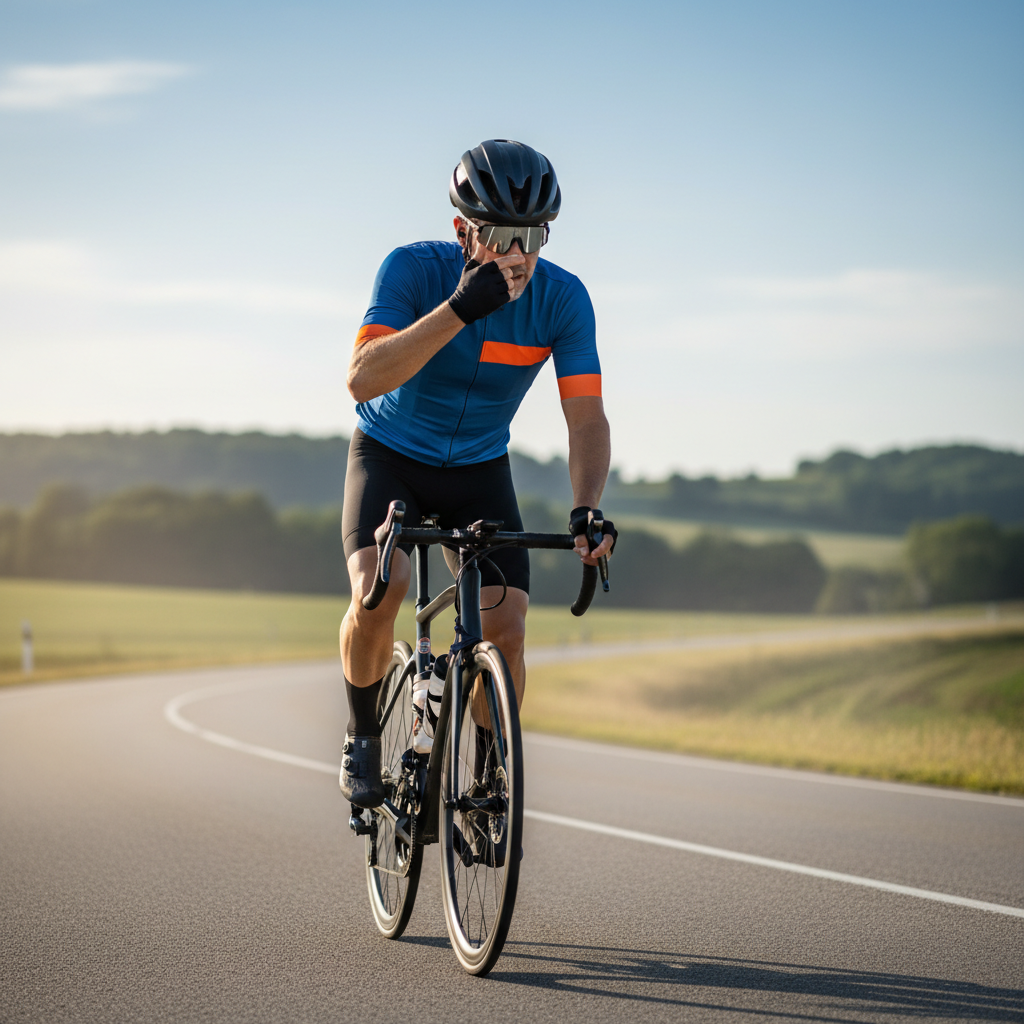
The good news, most people do not need a complicated setup. A few fit adjustments, the right sweat management layer, and a small change in habits often reduce eye sting dramatically, even if you sweat “a lot.”
Why sweat gets into your eyes on the bike
Sweat is supposed to evaporate. On a bike, airflow helps, but a few common factors reroute sweat straight into your eyes.
- Helmet position and pad saturation: If the front pads soak through, sweat drips at the brow line and takes the shortest path down.
- Head angle on climbs: Looking slightly down while grinding uphill can make sweat run forward instead of sideways.
- Hair and skin oils: Hair can “wick” sweat forward, while sunscreen and skin oils can carry salt into the eyes and worsen sting.
- Eyebrow and forehead shape: Some people naturally funnel sweat inward toward the nose bridge.
- Humidity and low evaporation: When sweat cannot evaporate, it accumulates and eventually pours.
If your eyes burn fast, it is often a salt concentration issue, not just volume. Hydration and electrolyte balance can influence this, but it varies by person and conditions.
Quick self-check: what type of “sweat-in-eyes” problem do you have?
Before buying anything, pinpoint the pattern. This usually tells you the cheapest fix.
- Drips from helmet pads: You feel drops falling from the front edge of the helmet.
- Runs from hairline: Sweat collects in hair and then releases in waves.
- Burns after sunscreen: Sting starts early, even before you are drenched.
- Only on climbs: Flats feel fine, but uphill efforts trigger it.
- Only with certain glasses: Sweat seems to pool behind lenses and then floods the eye.
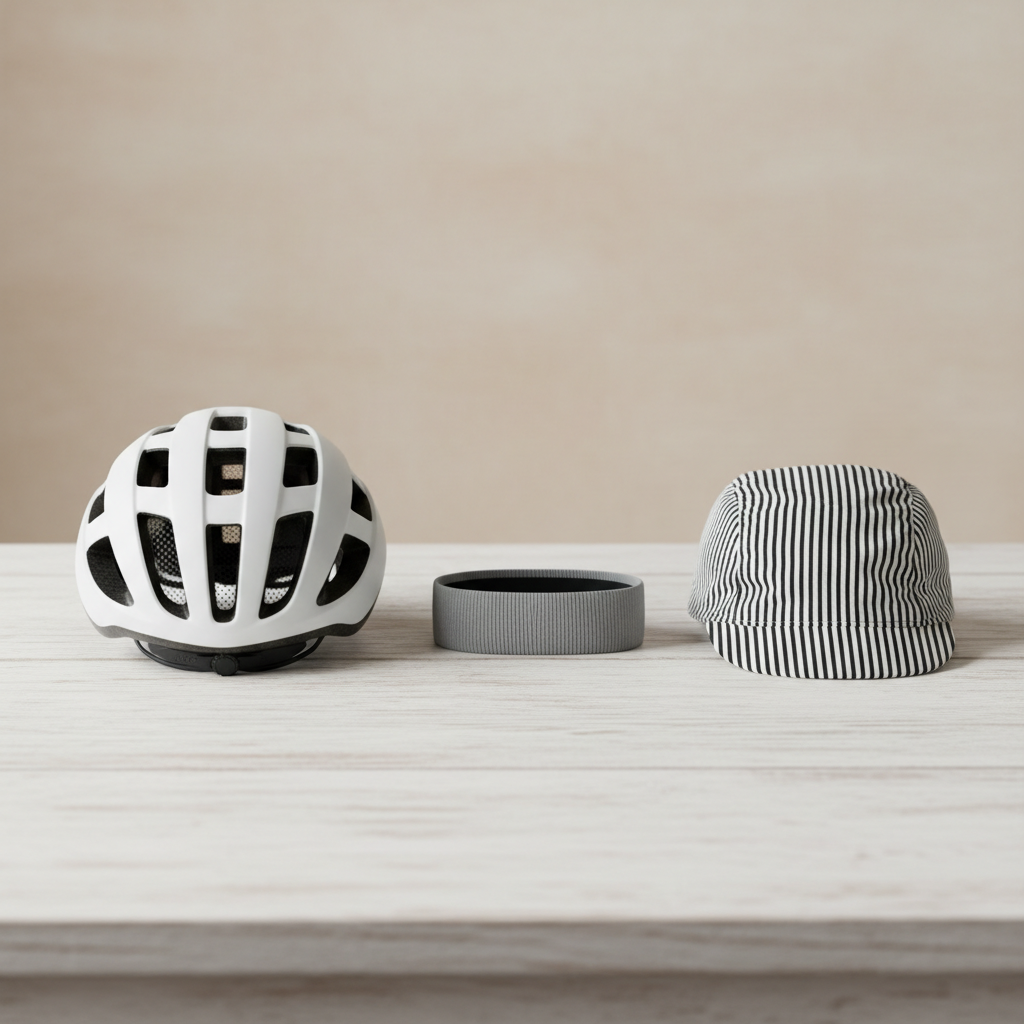
Once you know the source, you can fix the route. Most solutions work by redirecting sweat sideways toward the temples and ears, or by absorbing it before it reaches your brow.
Gear that actually helps (and what to look for)
You do not need a “miracle” product, you need something that matches your sweat pattern and your helmet fit.
Sweatband or headband (under the helmet)
This is the most direct way to keep sweat off your eyebrows. Look for thin, moisture-wicking fabric with a snug fit so it does not bunch under the helmet.
- Best for: hairline runners, heavy sweaters, long indoor rides.
- Watch for: thick terry bands that create pressure points or change helmet fit.
Cycling cap or visor insert
A cap brim changes drip direction. Even a short brim can keep sweat from falling straight down.
- Best for: sunny rides, drips from helmet pads, riders who like extra shade.
- Watch for: overheating if the cap fabric does not breathe well.
Helmet pad management
Clean pads wick better, and extra pads let you rotate. Some helmets accept different pad thicknesses, which can also change how sweat moves.
- Best for: people who feel “pad drip.”
- Watch for: pads that stay saturated for the entire ride.
Eyewear: glasses that reduce sweat pooling
Bigger shields can block wind, but they can also trap humidity. Many riders do better with glasses that have decent venting or a slightly more open top edge.
- Best for: sting plus blurry lenses.
- Watch for: foam gaskets in hot weather, they can trap sweat.
Fast fixes with no new purchases
If you need relief today, try these changes first. They are surprisingly effective when matched to the cause.
Adjust helmet tilt and front gap
Many riders wear the helmet a bit too low in front. A small tilt back can reduce the “gutter” effect where sweat funnels to the brow. Keep it within safe positioning so the helmet still protects your forehead.
Move the front pads (or remove one, carefully)
If your helmet design allows it, reposition pads so the thickest absorption is not directly above the nose bridge. Removing pads can change impact management and comfort, so follow the manufacturer guidance.
Pre-ride face rinse and sunscreen discipline
If sunscreen contributes to burn, apply it earlier, let it set, then gently blot the eyebrow area. Many riders avoid putting sunscreen directly on the brow line and upper eyelids, but you still want sun protection, so consider a cap brim, sunglasses, or a different formula that stings less for you.
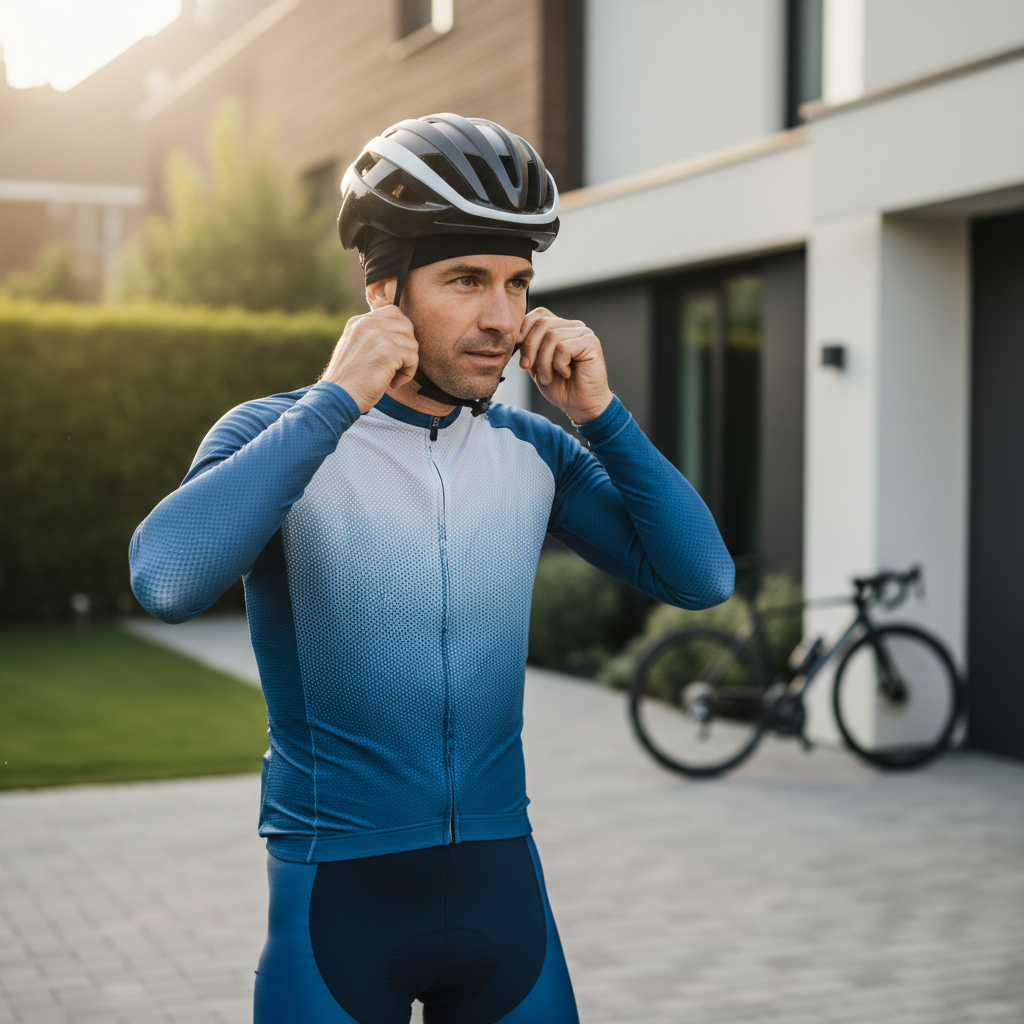
On the bike, avoid wiping directly across the eye. If you must clear sweat, swipe from eyebrow outward toward the temple, it keeps salt away from the tear line and usually feels less abrasive.
Practical setup guide by riding scenario
Here is a realistic way to choose a setup without overthinking it.
| Scenario | What usually causes the problem | What to try first |
|---|---|---|
| Hot outdoor endurance ride | Pad saturation + steady sweating | Thin headband + cleaned/rotated pads |
| Long climbs or low-speed gravel | Head angle shifts sweat forward | Cycling cap brim + helmet tilt check |
| Indoor trainer session | No airflow, sweat pools quickly | Headband + big fan aimed at face/torso |
| Short intense intervals | Fast sweat rate, higher salt sting | Pre-ride rinse, avoid brow sunscreen, keep towel handy |
| Rides with glasses fogging | Humidity trapped behind lenses | More vented eyewear, slightly lower lens position |
Common mistakes that keep the sting going
- Over-tight headbands: they feel “secure,” but can create pressure headaches and still leak once saturated.
- Ignoring pad hygiene: salty, oily pads stop wicking and start dripping earlier.
- Using thick cotton: cotton often holds moisture and becomes a wet sponge on long rides.
- Wiping with salty gloves: gloves absorb sweat too, so you may be rubbing salt back into your eye area.
- Chasing one perfect product: most riders need a small combo, like headband plus a minor helmet adjustment.
Also, if you are trying to figure out how to keep sweat out of eyes cycling and nothing works, consider whether the real trigger is skin irritation from sunscreen, cleanser residue, or even certain laundry detergents on headbands and caps.
When to consider medical or professional help
Most sweat-in-eyes issues are mechanical, but a few situations deserve extra caution.
- Persistent burning even when sweat is minimal, which could suggest irritation, dry eye, or allergy triggers.
- Redness, swelling, or discharge after rides, which may indicate infection and should be discussed with a clinician.
- Vision changes that do not clear quickly after you stop, especially if you also feel headache or light sensitivity.
According to American Academy of Ophthalmology (AAO), eye irritation and redness that persists or worsens is a good reason to seek professional evaluation. If you wear contact lenses, be extra conservative, sweat and salt can increase discomfort and rubbing can scratch the cornea.
Key takeaways you can use on the next ride
- Stop the route: redirect sweat sideways with a thin headband or cap brim.
- Fix the source: clean and rotate helmet pads, and check helmet tilt.
- Reduce sting triggers: keep sunscreen out of the brow line when possible, and avoid wiping with salty gloves.
If you want the simplest plan, start with one change you can feel immediately: add a low-profile wicking headband, then fine-tune helmet positioning on your next climb. Most riders notice the difference fast, and it makes staying focused much easier.
If you are still wrestling with how to keep sweat out of eyes cycling after trying the basics, it may be worth asking a local bike shop to check helmet fit and strap tension, small adjustments sometimes solve what “more gear” cannot.