
Beach Fitness sounds simple until you hit soft sand, bright sun, and a packed shoreline, suddenly even a “quick workout” feels messy and hard to pace.
The good news, the beach can be a genuinely effective training spot if you treat it like a real environment, heat management, footing, and hydration matter as much as the exercises. Do it right and you get a mix of cardio, balance, and strength that many gym sessions miss.
This guide gives you practical beach workout ideas, a quick self-check to pick the right intensity, and a few safety habits that keep summer training from turning into a bad day.
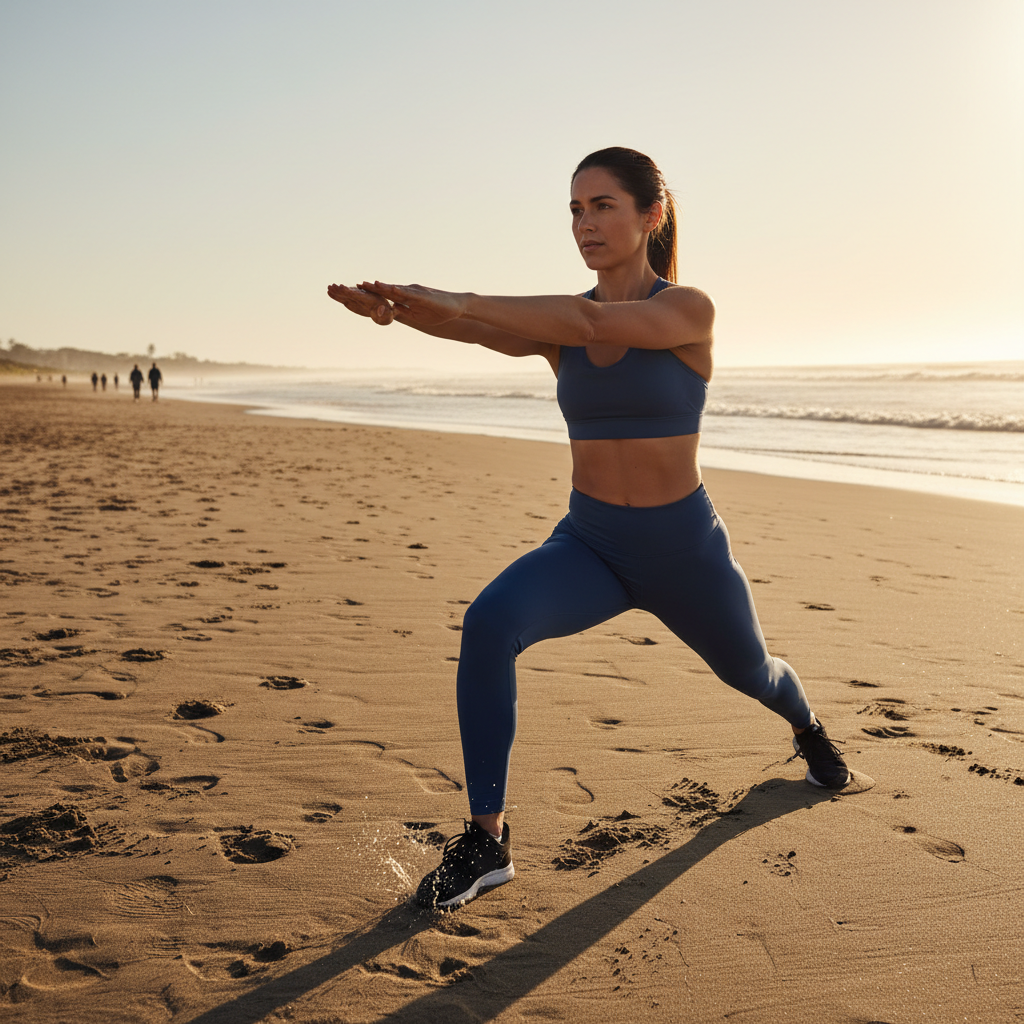
Start with a quick beach-ready self-check
Before you plan intervals or grab a volleyball, check a few basics. It takes one minute and usually prevents the common “I went too hard, too fast” scenario.
- Heat tolerance today: If you already feel sluggish in the sun, keep intensity moderate.
- Foot and ankle history: Prior sprains or plantar fasciitis often flare on uneven sand.
- Time window: Midday heat changes everything, sunrise and late afternoon are friendlier.
- Water plan: If you didn’t bring water, choose a shorter session.
- Space: Crowded beach equals limited sprint lanes and more stop-and-go.
If two or more of these feel “off,” don’t force a high-intensity session, choose a technique day, a walk-run, or strength circuits with longer rest.
Why beach workouts feel harder (and why that can be useful)
Beach training can feel like you lost fitness overnight. Usually it’s the surface and the conditions, not you.
- Sand absorbs force: Every step sinks a bit, so your calves, glutes, and stabilizers work overtime.
- Unstable footing: Your balance system stays “on,” which can build control but also raises injury risk if you rush.
- Heat load: Sun and humidity raise heart rate at the same pace.
- Wind resistance: Running into a headwind quietly turns easy pace into threshold effort.
According to the Centers for Disease Control and Prevention (CDC), hot weather increases the risk of heat-related illness, so it makes sense to scale intensity and prioritize hydration breaks during summer sessions.
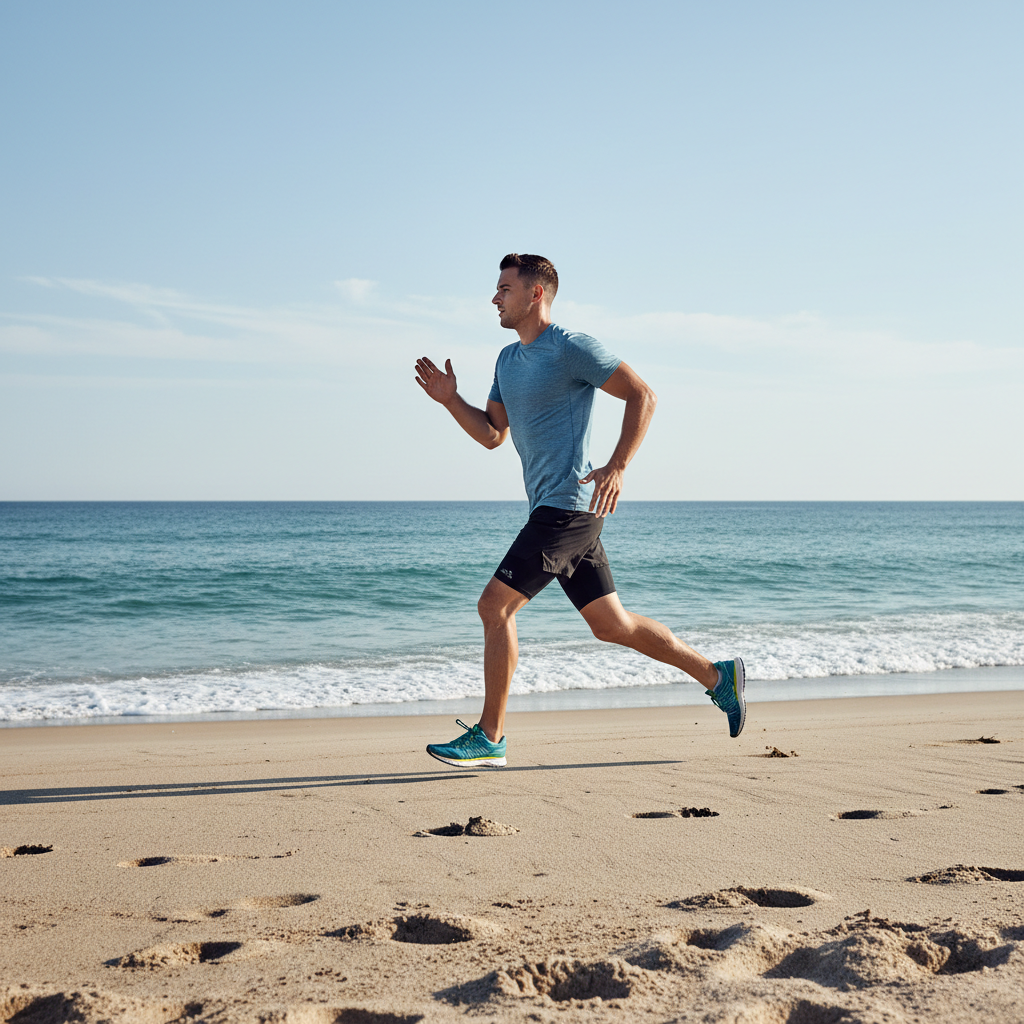
Beach Fitness workout ideas (pick one based on your goal)
If you want beach workouts that actually translate to results, match the session to one main goal: cardio, strength, or mobility. Mixing everything sounds fun, but many people end up doing a little of everything and not enough of anything.
1) Cardio: waterline intervals (beginner to advanced)
Use the firm sand near the waterline for more predictable footing, and keep the soft sand for short bursts.
- Beginner: 10 rounds of 30 seconds brisk jog, 60 seconds walk
- Intermediate: 8 rounds of 45 seconds fast, 75 seconds easy
- Advanced: 10 rounds of 30 seconds hard, 30 seconds easy, finish with 5–10 minutes easy walk
Tip that matters: pick a landmark (lifeguard stand, pier post) instead of staring at your watch, pacing feels easier.
2) Strength: sand circuit (no equipment)
This is where Beach Fitness really shines, sand adds instability so you can get a challenge without heavy loads.
- Squats or squat pulses: 12–20 reps
- Push-ups (hands on a towel if needed): 8–15 reps
- Reverse lunges: 10–12 reps each side
- Plank or plank shoulder taps: 30–45 seconds
- Bear crawl forward/back: 10–20 yards total
Do 3–5 rounds with 60–90 seconds rest. If form slips, shorten the set and keep quality.
3) Power: short hill sprints on dunes (only if joints tolerate it)
Dune sprints are effective but not casual. If your Achilles, knees, or lower back get cranky, skip this.
- Warm up longer than you think you need, 8–12 minutes easy movement
- 6–10 x 8–12 seconds uphill sprint
- Walk down fully, rest 60–120 seconds
Keep it short and snappy, the moment you feel your stride collapse, you’re done.
4) Low-impact: weighted walk (or “ruck”) on packed sand
If running feels rough, try a purposeful walk. A backpack with a little weight can raise intensity without pounding.
- 20–45 minutes steady walk
- Focus on posture, ribs down, relaxed shoulders
- Stay on firmer sand to reduce ankle wobble
A simple plan: choose duration, surface, and intensity
People usually overthink the exercises and underthink the setup. Use this table to pick a session that fits your day.
| Goal | Best beach spot | Time | Intensity feel |
|---|---|---|---|
| Easy cardio + recovery | Packed sand near waterline | 20–40 min | Conversation pace |
| Fatigue-resistant cardio | Waterline out-and-back | 20–30 min | Breathing harder, still controlled |
| Strength + stability | Dry sand with open space | 25–45 min | Muscles burn, joints feel stable |
| Speed/power | Short dune incline | 15–25 min | Very hard efforts, long rest |
Key takeaway: if your footing feels sketchy, move closer to the waterline, “harder surface” is often safer.
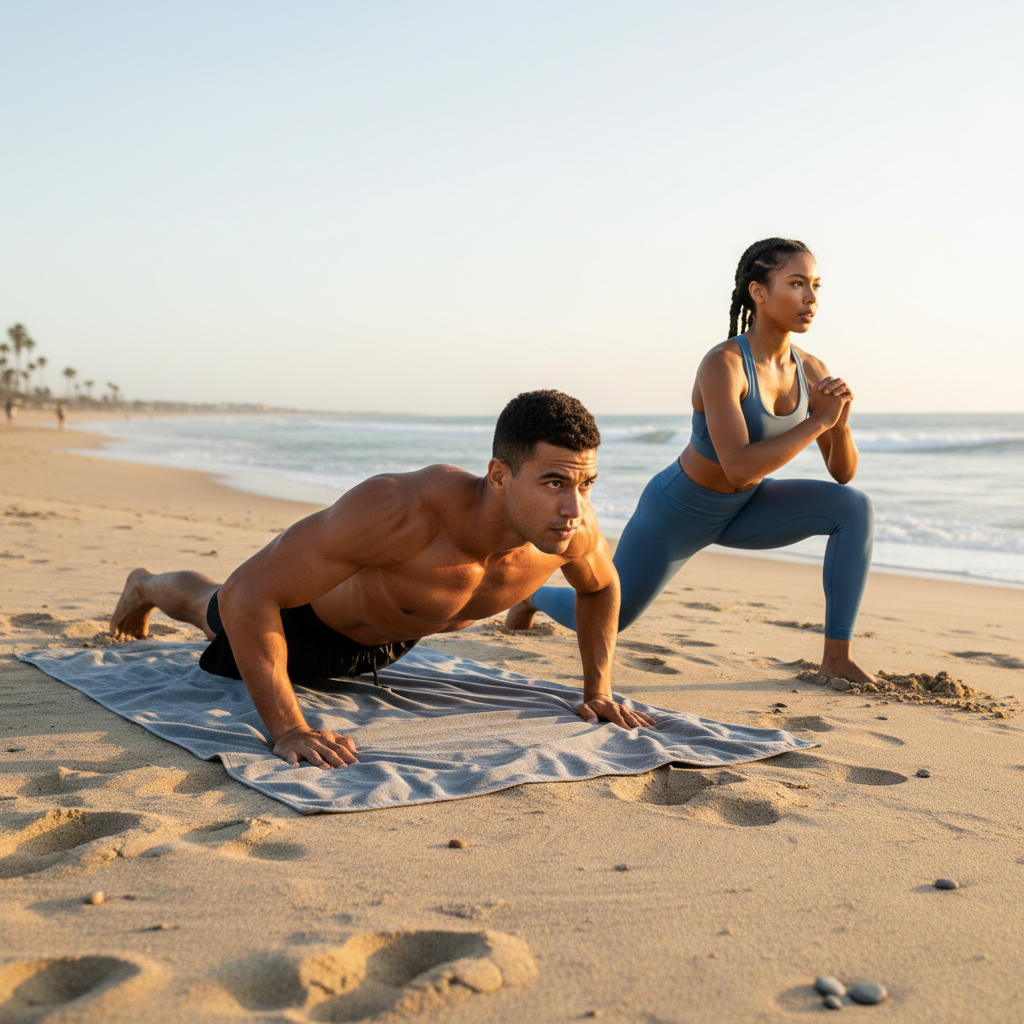
Practical execution: a 30-minute beach session you can repeat
If you want one go-to option that fits most summer days, use this. It’s not fancy, it’s repeatable, and repeatable usually wins.
- Warm-up (6 minutes): easy walk, ankle circles, leg swings, 2 short 10-second pickups
- Main set (16 minutes): 8 rounds, 40 seconds steady run + 80 seconds walk
- Strength finisher (6 minutes): 2 rounds of 10 squats, 8 push-ups, 20-second plank
- Cool down (2 minutes): slow walk, deep breathing
If this feels too easy, shorten the walk breaks. If it feels too hard, keep the run portion as a fast walk.
Safety and common mistakes (this is where most people lose momentum)
Beach workouts fail for boring reasons: blisters, sun, and doing “dune sprints” on day one. A few small choices keep Beach Fitness enjoyable.
- Going barefoot too soon: Many beaches hide shells and hot sand patches, consider water shoes if your feet get torn up.
- Ignoring sun angle: If you can, train earlier, bring shade, or plan shorter rounds. According to the American Academy of Dermatology (AAD), sunscreen and sun-protective clothing help reduce UV risk, which matters during long outdoor workouts.
- Not respecting the slope: Running on tilted shoreline can irritate hips and knees. Switch directions often or pick flatter stretches.
- Too much soft sand mileage: Soft sand loads calves and Achilles. Use it as a tool, not the whole session.
- Under-hydrating: If you sweat heavily, you may need more fluids and electrolytes than on a mild day, a clinician can help if you have health conditions.
If you feel dizziness, nausea, chills, confusion, or a pounding headache, stop, cool down in shade, and seek medical help if symptoms persist. When in doubt, it’s smarter to call it early.
When to get professional input
A beach workout should challenge you, not leave you guessing about pain. Consider talking with a certified personal trainer, physical therapist, or your clinician if any of these show up.
- Foot, ankle, or Achilles pain that returns every session
- History of heat illness, or medications that affect hydration or heart rate
- Low back pain that spikes on uneven sand
- Uncertainty about returning to exercise after injury or childbirth
According to the American College of Sports Medicine (ACSM), exercise plans should be individualized, especially when health conditions or injury history influence training tolerance.
Conclusion: keep Beach Fitness simple, consistent, and safe
Beach Fitness works best when you respect the environment, pick the right surface, and repeat a plan you can recover from. Your “perfect” beach workout rarely beats the one you can do twice a week all summer.
If you want an easy next step, choose one session style from this guide, schedule it for a cooler time of day, and keep notes on how your feet and calves feel the next morning, that one detail often tells you how aggressive to go next time.
FAQ
- Is Beach Fitness better on wet sand or dry sand?
Wet, packed sand usually feels more stable and joint-friendly for running. Dry sand often works better for strength circuits or short power bursts, but it can fatigue calves faster. - How long should a beginner beach workout be?
Many beginners do well with 20–30 minutes including warm-up and walking breaks. The beach adds load, so a shorter session can still be plenty. - Can I do Beach Fitness workouts barefoot?
Sometimes, but it depends on sand temperature, debris, and your foot tolerance. If you’re new to barefoot training, start with short segments and consider footwear if you get hot spots or cuts. - What should I eat or drink before a beach workout?
For most people, water plus a light snack works well, especially if you train in heat. If you sweat heavily or cramp often, electrolytes may help, and a clinician can advise if you manage blood pressure or kidney issues. - Why do my calves hurt after running on sand?
Sand usually increases calf and Achilles demand because you push off a softer surface. Reduce soft-sand volume, add a longer warm-up, and build exposure gradually. - Are dune sprints safe for everyone?
Not always. They’re high-intensity and can aggravate Achilles, knees, or low back issues. If you’re unsure, choose waterline intervals or a strength circuit instead. - What’s a simple way to progress Beach Fitness over the summer?
Add progress in one variable at a time, a few more rounds, slightly faster intervals, or one extra circuit. When you change everything at once, it’s hard to tell what caused soreness or fatigue.
If you’re trying to turn beach days into a consistent routine, it can help to pick two “default” sessions, one cardio-focused and one strength-focused, then rotate them based on weather and how your body feels that week.