
Evening Fitness works best when it helps your body downshift, not rev up, and that usually means choosing the right intensity, timing, and a routine you can repeat on busy nights.
If your evenings are the only time you can move, you’re not alone, but the tradeoff is real: hard workouts too late can leave you wired, sore, or staring at the ceiling. The good news is you can still train and feel relaxed, as long as you steer the session toward mobility, steady breathing, and “just enough” effort.
People also get tripped up by a common misconception: “relaxation” equals “no workout.” In practice, relaxation often comes from the right kind of movement, the kind that reduces muscle tension and quiets the nervous system, while still building consistency.
This guide walks through what to do, what to avoid, and how to build an evening plan that fits your schedule, whether you have 15 minutes or a full hour.
Why evening workouts can feel relaxing, or totally backfire
Evening training can be a stress reset, but it can also collide with sleep. The difference usually comes down to intensity, stimulants, and how close you are to bedtime.
- Intensity spikes: heavy lifting to failure, all-out intervals, or competitive sports can elevate arousal and make it harder to unwind.
- Timing: many people tolerate moderate work 2–3 hours before bed, but closer than that can feel edgy, especially if you’re already stressed.
- Posture load: desk work often tightens hips, upper back, and neck. A targeted mobility session tends to feel instantly soothing.
- Food and caffeine: late pre-workout, energy drinks, or even a strong coffee “to get through it” can be the real reason sleep suffers.
According to the Centers for Disease Control and Prevention (CDC), adults benefit from regular physical activity for overall health, and for many people the practical question is not “if,” it’s “when.” Evening can work well, but it needs a slightly different playbook.
A quick self-check: what kind of evening routine do you need?
Before you copy a routine from social media, take 30 seconds to sort yourself into a bucket. This prevents the classic mistake: doing an athlete-style session when what you really need is recovery.
- You need calming movement if you often feel tired-but-wired at night, wake up frequently, or notice jaw/neck tension after work.
- You need light conditioning if you feel restless in the evening and sleep improves when you get a gentle sweat.
- You can handle strength training if you generally fall asleep easily and your sessions end at least a couple hours before bed.
- You should keep it very light if you’re sick, dealing with a flare-up, or your healthcare professional told you to limit activity.
If you’re unsure, start with the calming option for two weeks and observe sleep quality, soreness, and mood. You can always add intensity later.
The “Relaxation-First” Evening Fitness routine (20–40 minutes)
This is the default routine I recommend for most people who want Evening Fitness without the sleep penalty. It’s simple, repeatable, and easy to scale.
1) Transition warm-up (3–5 minutes)
- Easy walk around your home, or march in place
- Shoulder rolls and gentle neck circles (slow, no forcing)
- 3–5 deep breaths with longer exhales
The point is not “getting pumped,” it’s telling your body the workday ended and you’re switching modes.
2) Mobility flow (8–12 minutes)
- Hip flexor stretch (30–45 seconds each side)
- 90/90 hip switches (6–10 controlled reps)
- Thoracic spine opener, such as open books (6–8 each side)
- Cat-cow (6–10 slow reps)
Keep it smooth. If you’re shaking or grimacing, you’re pushing too hard for an evening wind-down.
3) Low-stress strength (8–15 minutes)
Pick 4–6 moves, keep the effort around a 6–7 out of 10, and stop with a little in the tank.
- Bodyweight squat to a chair, or light goblet squat
- Incline push-ups on a counter
- Resistance band row
- Glute bridge
- Dead bug or bird dog for core control
Many people sleep better when evening strength feels “satisfying” but not punishing.
4) Downshift breathing (2–5 minutes)
- Breathe in through the nose, exhale longer than you inhale
- Unclench your tongue from the roof of your mouth, relax jaw
- Light stretch if it feels good, skip if it turns into a wrestling match
If you only have 10–15 minutes: three micro-routines
On real weekdays, time is the constraint. These quick sessions still count, and they’re often easier to stick with than a perfect plan.
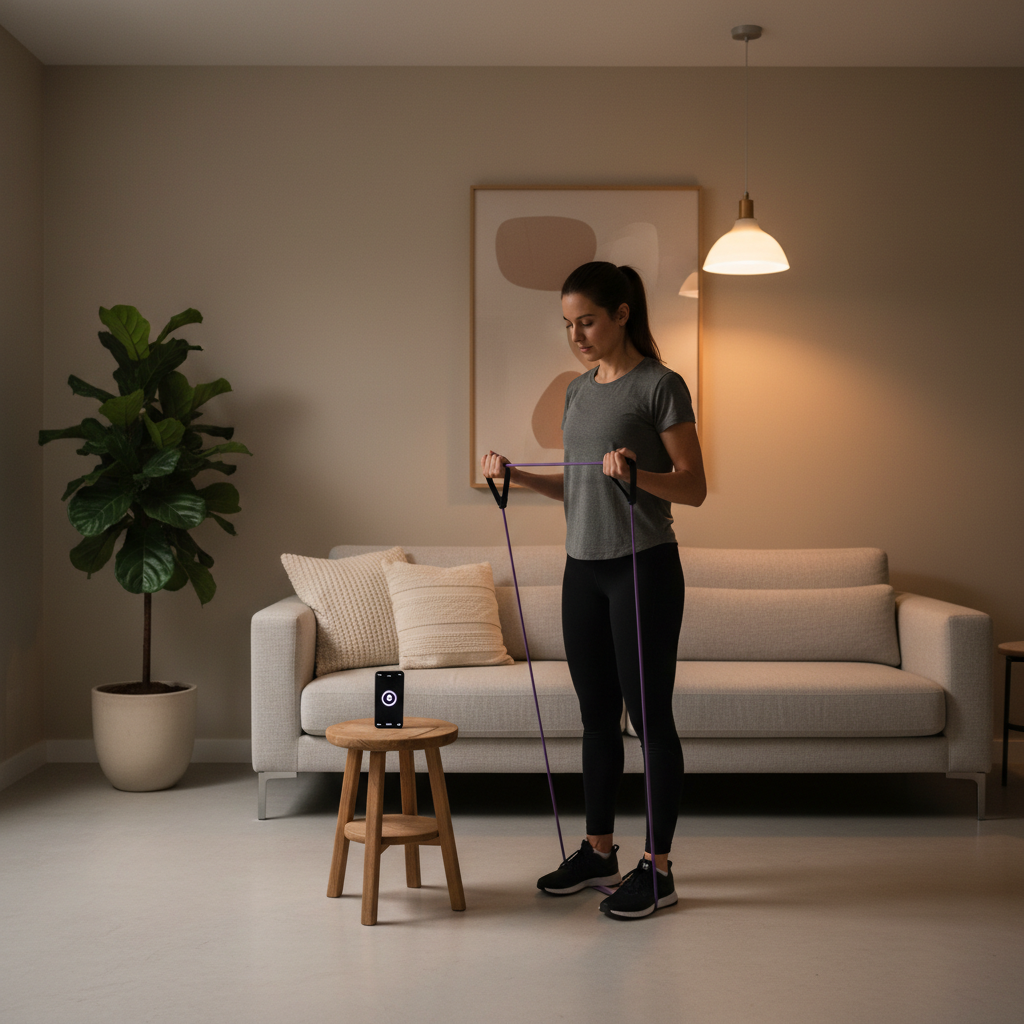
- Desk-undo (10 minutes): hip flexor stretch, open books, band pull-aparts, child’s pose breathing.
- Light sweat (12 minutes): 30 seconds brisk march + 30 seconds easy pace, repeat, finish with calf/hip stretch.
- Strength snack (15 minutes): 2 rounds of squats, incline push-ups, band rows, glute bridges, easy pace.
If you consistently train late, these shorter sessions often beat long, intense workouts that disrupt sleep.
Timing, food, and screens: the part most people ignore
The routine matters, but the “edges” around it often decide whether you feel relaxed or restless.
- Stop caffeine earlier: everyone’s sensitivity differs, but late-day stimulants can be a hidden saboteur.
- Finish with a buffer: if possible, end your main work at least 60–120 minutes before bed.
- Keep post-workout meals simple: a moderate, familiar meal tends to sit better than a huge, spicy, high-fat dinner right before sleep.
- Dim the inputs: bright lights and intense scrolling can undo the calm you just earned.
According to the National Sleep Foundation, consistent sleep habits and a calming pre-sleep routine can support better sleep quality. Evening exercise can fit that, but pairing it with a loud, stimulating wind-down usually doesn’t.
A practical table: match your goal to the right evening workout
If you’re deciding what to do tonight, use this as a quick chooser instead of negotiating with yourself for 20 minutes.
| Goal | Best evening workout style | Keep intensity at | Finish before bed |
|---|---|---|---|
| Relaxation + better sleep | Mobility + low-stress strength + breathing | Easy to moderate | 60–120 min |
| Stress relief after work | Brisk walk, bike, easy circuits | Moderate, steady | 60–180 min |
| Maintain strength | Technique-focused lifting, no maxing out | Moderate | 90–180 min |
| Fat loss focus | Consistency-first: steps + short strength | Moderate, repeatable | 60–180 min |
These time windows vary by person. If you notice consistent sleep disruption, shift the session earlier or reduce intensity.
Common mistakes that make Evening Fitness feel worse
- Turning every session into a test: trying to “make it count” often produces late-night adrenaline.
- Skipping the downshift: stopping abruptly after hard work, then jumping into emails or chores keeps your system on high.
- Stretching like a punishment: aggressive stretching can irritate tissues and backfire; gentle works better at night.
- Ignoring pain signals: sharp pain, numbness, or joint instability is not a flexibility problem.
According to the American College of Sports Medicine (ACSM), balanced programs often include aerobic activity, strength training, and flexibility work. In the evening, the balance tends to tilt toward what helps recovery and consistency, not maximal output.
When it makes sense to get professional help
If you’re trying to use exercise to relax but feel worse week after week, it’s a sign to bring in help rather than forcing willpower.
- Persistent insomnia, anxiety, or symptoms that might involve sleep disorders, a clinician can help you sort causes.
- Recent injury, dizziness, chest pain, or unexplained shortness of breath, stop and seek medical advice.
- Chronic back, hip, or shoulder pain, a physical therapist can tailor mobility and strength safely.
- If you’re pregnant, managing a health condition, or returning after a long break, a qualified professional can help you pick appropriate intensity.
This is not about making things complicated, it’s about avoiding the loop where exercise becomes another stressor.
Key takeaways (save these for tonight)
- Evening Fitness feels calming when intensity stays moderate and the session ends with a downshift.
- Mobility plus light strength is a reliable combination for stress relief and recovery.
- Short workouts beat inconsistent “hero sessions,” especially if you train late.
- If sleep worsens, adjust timing, reduce intensity, and watch caffeine and screens.
Conclusion: a better night starts with a simpler plan
If your goal is relaxation, pick a routine that leaves you feeling capable and loose, not depleted and wired. Start with the Relaxation-First plan three evenings this week, keep it easy enough that you could repeat it tomorrow, and give yourself a small buffer before bed.
If you want one action step: set a 25-minute timer tonight, do mobility plus light strength, then spend two minutes on slow breathing. It’s surprisingly effective when you keep it simple.
FAQ
Is it okay to do Evening Fitness right before bed?
It can be okay if the session is truly low intensity, think gentle mobility and breathing. If you notice trouble falling asleep, move it earlier or dial back effort.
What’s the best type of exercise for relaxation at night?
For many people, mobility work paired with light, controlled strength feels calming because it reduces stiffness without triggering a big adrenaline response.
Will strength training at night ruin my sleep?
Not always. Many people sleep fine if they avoid max efforts and finish with a downshift. If you lift heavy late and feel wired, switch to technique-focused sets or train earlier.
How long should an evening workout be?
Often 20–40 minutes is enough. If you’re squeezed for time, 10–15 minutes done consistently tends to beat long sessions you can’t maintain.
Should I stretch a lot after an evening workout?
Gentle stretching can help, but forcing range of motion at night can irritate joints or tissues. Aim for easy holds and stop before pain.
What should I eat after working out in the evening?
A moderate meal with protein and carbs works for many people, but heavy, spicy, or very fatty meals close to bedtime can feel uncomfortable. If digestion affects your sleep, keep it lighter and earlier.
Can Evening Fitness help with stress and anxiety?
It can support stress management for many people, especially with steady breathing and moderate intensity, but it’s not a replacement for mental health care. If anxiety is persistent or severe, consider speaking with a licensed professional.
If you’re trying to build an evening routine that actually sticks, it often helps to keep the plan repeatable, choose a few go-to movements, and adjust intensity based on how you want to sleep, not how tough you want to feel in the moment.